
Isochaetes beutenmuelleri
(Edwards, 1887)
Spun Glass Slug Moth
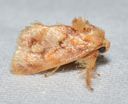
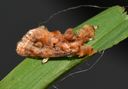
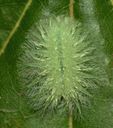
Isochaetes beutenmuelleri, commonly known as the spun glass slug , is a small moth in the Limacodidae. It is named for its distinctive pupal stage, which appears nearly transparent and is covered in spiny, venomous hairs. The is native to the eastern and central United States, where its larvae feed on oak and beech trees.
Pronunciation
How to pronounce Isochaetes beutenmuelleri: /ˌaɪsoʊˈkiːts ˌbɔɪtənˈmjuːləri/
These audio files are automatically generated. While they are not always 100% accurate, they are a good starting point.
Identification
are small with wingspan of 19–24 mm. The is most readily identified by its distinctive pupal stage: nearly transparent with conspicuous spiny, stinging hairs. Among Limacodidae in its range, the transparent pupa with venomous spines is diagnostic.
Images
Habitat
Associated with oak and beech forests and woodlands; specific requirements beyond tree presence not documented.
Distribution
Eastern and central United States: from New York south to Florida, and west to Colorado and Texas.
Seasonality
active from June to August.
Diet
Larvae feed on oak (Quercus) and beech (Fagus).
Host Associations
- Quercus - larval plantoak
- Fagus - larval plantbeech
Life Cycle
Complete with , larva, pupa, and stages. Pupae are enclosed in a nearly transparent cocoon with venomous spiny hairs.
Behavior
are and attracted to light; specific behavioral details otherwise undocumented.
Ecological Role
Herbivore as larva, consuming foliage of oak and beech; may contribute to nutrient cycling in forest . Venomous pupal hairs suggest defense against .
Human Relevance
Pupal hairs contain venom that can cause dermatitis; contact with pupae should be avoided. Not considered an agricultural or forestry pest.
Similar Taxa
- Other LimacodidaeMany slug caterpillar moths share similar larval body form; distinguished by plant specificity and the distinctive transparent, spiny pupa of I. beutenmuelleri.
- Other stinging caterpillarsSeveral Lepidoptera have venomous larval or pupal hairs; the nearly transparent pupa with dense spines is characteristic of this .
More Details
Etymology
'spun glass slug ' refers to the glass-like transparency of the pupal cocoon and the slug-like form of the larva.
Venom
The pupal spines contain a venom that can cause skin irritation and dermatitis; this is a defensive against .