
Lithariapteryx
Chambers, 1876
sun moths
Species Guides
4- Lithariapteryx abroniaeella(Jewel-studded Sand Verbena Sun Moth)
- Lithariapteryx elegans(Elegant jewel-studded sun moth)
- Lithariapteryx jubarella(Orange-banded jewel-studded sun moth)
- Lithariapteryx mirabilinella(Jewel-studded four o'clock sun moth)
Lithariapteryx is a of small sun moths in the Heliodinidae, established by Chambers in 1876. The genus contains at least four described distributed in North America. Members are characterized by their minute size, with wingspans around 1 centimeter or less, and distinctive metallic silver markings. The genus is part of the Yponomeutoidea superfamily, a group of small often referred to as microlepidoptera.
Pronunciation
How to pronounce Lithariapteryx: //laɪˌθɛəriˈæptərɪks//
These audio files are automatically generated. While they are not always 100% accurate, they are a good starting point.
Identification
The combination of extremely small size (wingspan ~1 cm or less), metallic silver wing markings, and silver-banded distinguishes Lithariapteryx from other Heliodinidae . For -level identification, reference to of Western North America (Powell) and the Moth Photographers Group website is recommended. Specimen preparation requires specialized micro-boards due to the tiny size.
Images
Appearance
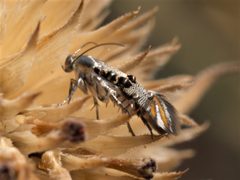
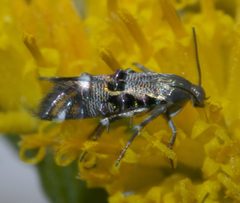
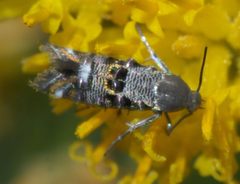
Extremely small with wingspans typically around 1 centimeter or less. Wings display striking metallic silver markings that have been described as resembling liquid mercury. The is banded with silver. Overall coloration and pattern vary by .
Distribution
North America, with records from the Texas Panhandle and western regions of the United States. Specific distribution varies by ; Lithariapteryx abroniaeella has been documented in west Texas.
Similar Taxa
- Other Heliodinidae generaLithariapteryx is distinguished by its minute size combined with distinctive metallic silver wing markings and silver-banded ; other lack this specific combination of traits.
More Details
Specimen handling
Due to their minute size, specimens require specialized preparation techniques including custom-made micro-boards with varying gap sizes, hooked probes for wing manipulation, and careful relaxing procedures.
Taxonomic resources
Identification relies heavily on of Western North America (Powell) and the Moth Photographers Group website, which provides images of nearly every moth north of Mexico.