
Phereoeca uterella
(Walsingham, 1897)
household casebearer, plaster bagworm
A small tineid known for its larval habit of constructing portable silk cases camouflaged with debris. are short-lived with reduced mouthparts. The occupies a distinctive feeding on silk, hair, and keratinous materials. Taxonomic boundaries remain unresolved, with in Sri Lanka and Uganda of uncertain status.
Pronunciation
How to pronounce Phereoeca uterella: /ˌfɛriˈiːkə ˌjuːtəˈrɛlə/
These audio files are automatically generated. While they are not always 100% accurate, they are a good starting point.
Identification
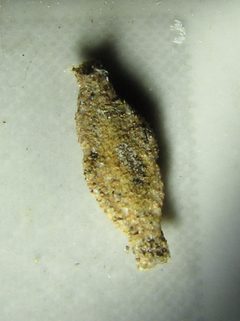
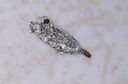
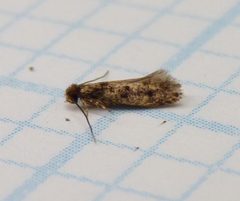
female wingspan up to 13 mm; forewings gray with distinct dark spots, hindwings plain with long gray fringe. Male smaller (wingspan up to 9 mm), more slender, with less distinct markings. Larval case up to 14 mm when mature, silk-based with debris camouflage, thickened centrally resembling a pumpkin seed, with openings at both ends.
Images
Habitat
Tropical and warm humid climates; primarily domestic environments including houses and buildings.
Distribution
presumed native; recorded from Brazil, Guyana, southern United States, Virgin Islands, Trinidad, and tentatively Tobago. Also recorded from southern India (Kerala) and of uncertain occurrence in Sri Lanka and Uganda due to taxonomic confusion.
Diet
Larvae feed on silk (especially spider webs and silk including cases), dander, fallen human hair, and wool. have reduced mouthparts and do not feed.
Life Cycle
Female lays up to 200 tiny pale blue in sheltered places. Larva constructs portable silk case camouflaged with soil, sand, and insect droppings. occurs within the case. Case shape (thickened centrally, openings at both ends) allows larva to reverse direction.
Behavior
Larva drags its protective case while feeding; case construction enables reversal of direction without turning.
Ecological Role
for chalcidid including Neohaltichella uterellophaga and Epitranus uterellophagus in southern India.
Human Relevance
Minor household pest; larvae damage woolens and feed on accumulated hair and debris in buildings.
Similar Taxa
- Phereoeca allutellaOverlapping vernacular name 'household casebearer' and similar larval case-building habit; distinguished by subtle morphological differences and geographic distribution
- Psychidae (bagworm moths)Similar larval case construction but belongs to different ; 'plaster bagworm' vernacular name is misleading as true bagworms are Psychidae