
Homostinea curviliniella
Dietz, 1905
Curved-lined Homostinea Moth
Homostinea curviliniella is a small described by Dietz in 1905. It is widely distributed across the eastern United States, with additional records from Arizona, Cuba, and Manitoba. The species is characterized by distinctive wing markings including a curved black line in the third of the forewing. It belongs to Meessiidae (sometimes treated as Tineidae in older sources).
Pronunciation
How to pronounce Homostinea curviliniella: /hoʊmɒsˈtɪniˌɛlə/
These audio files are automatically generated. While they are not always 100% accurate, they are a good starting point.
Identification
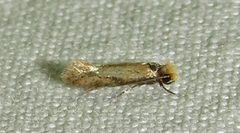
Identified by small size (~8 mm wingspan) and distinctive forewing pattern: curved black line in third, blackish spot in costal half before middle, and blackish anal angle. The curved line is a key diagnostic feature referenced in the . Distinguished from similar small tineid moths by the specific arrangement of dark markings and the presence of scattered whitish in the apical forewing.
Images
Appearance
Small with wingspan approximately 8 mm. Forewings sordid yellowish with dense fuscous dusting, condensed along except for terminal fifth. Extreme costal base dark fuscous; extreme base and anal angle blackish. Blackish spot present in costal half before middle. Curved black line, often interrupted, in middle of third, curved toward and nearer margin. Scattered more pronounced along dorsal margin; apical part of wing with scattered whitish scales. Hindwings greyish fuscous with weak brassy lustre toward apex.
Distribution
Eastern half of the United States; Arizona; Cuba; Manitoba, Canada.