
Naryciinae
Tutt, 1900
Genus Guides
2- Dahlica(bagworm moth)
- Kearfottia
Naryciinae is a of bagworm moths (Psychidae) characterized by monandrous females that mate only once. Females are immobile and wingless, while males are short-lived, non-feeding, and capable of multiple copulations. Several exhibit parthenogenetic , including *Dahlica fennicella* and *D. triquetrella*. The subfamily serves as for a diverse complex in northern European .
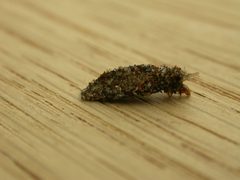
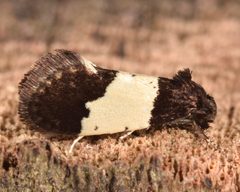
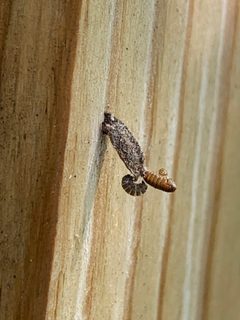
Pronunciation
How to pronounce Naryciinae: //næˈɹɪsi.iːˌnaɪ//
These audio files are automatically generated. While they are not always 100% accurate, they are a good starting point.
Images
Distribution
Central Finland (documented); broader distribution within Psychidae range implied but not specifically established for Naryciinae.
Life Cycle
Larval stage is the primary feeding and growth phase; studies indicate larval stage is vulnerable to attack by koinobiont and idiobiont . Developmental timing differs between sexes, potentially causing reproductive asynchrony.
Behavior
Females are monandrous (mate once) and immobile. Males are short-lived, do not feed, and are capable of multiple copulations. Unfertilized females are capable of re-mating. has evolved repeatedly in this group.
Ecological Role
Misconceptions
Sperm limitation from male mating history was hypothesized as a driver of evolution in Psychidae, but empirical study found that male mating history did not cause strong sperm limitation in Naryciinae despite traits suggesting otherwise.
More Details
Male mating effects on female fitness
In *Siederia listerella*, females produced 30% fewer offspring when mating with previously mated males. In *Dahlica lichenella*, female reproductive success was higher when males were older and had fewer total lifetime copulations.
Sex ratios and male limitation
Only a fraction of 53 investigated natural showed female-skewed sex ratios; differences in development time between sexes may create reproductive asynchrony rather than absolute male limitation.
Cryptic parasitoid diversity
Molecular analysis revealed cryptic in *Macrus parvulus* associated with sexual versus parthenogenetic , and that *Trachyarus brevipennis* and some *T. fuscipes* are of one species.
Sources and further reading
- BugGuide
- iNaturalist taxon
- NCBI Taxonomy
- Catalogue of Life
- Influence of male mating history on female reproductive success among monandrous Naryciinae (Lepidoptera: Psychidae)
- The parasitoid species complex associated with sexual and parthenogenetic Naryciinae (Lepidoptera: Psychidae): Integrating ecological and molecular analyses