
Melete lycimnia
(Cramer, 1777)
common melwhite, primrose flag, lycimnia white flag
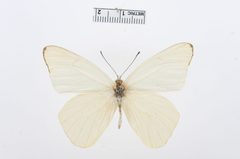
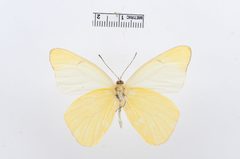
Melete lycimnia is a in the Pieridae found from Texas to Bolivia. It inhabits lowland rainforests and exhibits considerable subspecific variation in coloration, ranging from white with narrow black borders to primrose yellow with wide brown borders. The has been documented with numerous across Central and South America.
Pronunciation
How to pronounce Melete lycimnia: /məˈliːteɪ lɪˈsɪmniə/
These audio files are automatically generated. While they are not always 100% accurate, they are a good starting point.
Identification
Distinguished from similar pierid whites by the presence of a yellow spot at the base of the hindwings in some (notably M. l. peruviana) and the primrose yellow coloration with wide brown borders in M. l. lycimnia. The combination of geographic range (Texas to Bolivia, lowland rainforests) and the specific wing pattern elements separate it from other Melete and sympatric pierids.
Images
Appearance
Wingspan 52–56 mm. show subspecific variation: M. l. peruviana has white ground color with narrow black borders and a yellow spot at the base of the hindwings; M. l. lycimnia is primrose yellow with wide brown borders. Females in all are more yellowish than males.
Habitat
Lowland rainforests.
Distribution
From Texas, United States south through Mexico, Central America, and South America to Bolivia. Documented in Colombia, Ecuador, Peru, Brazil, Trinidad, Panama, Rica, Honduras, and Suriname.
Diet
Larvae probably feed on Loranthaceae .
Host Associations
- Loranthaceae - probable larval Based on probable feeding habits; specific not confirmed.
Similar Taxa
- Other Melete speciesShare -level characteristics but differ in specific wing pattern elements and geographic distribution.
- Sympatric Pieridae whitesSimilar general appearance but distinguished by wing pattern details, particularly the yellow hindwing basal spot and brown border width variations in M. lycimnia .
More Details
Subspecific variation
The exhibits extensive subspecific variation with at least 15 named recognized, showing clinal variation in ground color from white to yellow and border width from narrow black to wide brown. This variation has led to complex taxonomic history with many described forms.