
Battus
Scopoli, 1777
Pipevine Swallowtails and Allies
Species Guides
2- Battus philenor(pipevine swallowtail)
- Battus polydamas(Polydamas Swallowtail)
Battus is a New World of swallowtail butterflies in the Papilionidae. The genus comprises approximately 9 distributed across the Americas, with the most well-known North American representatives being Battus philenor (pipevine swallowtail) and Battus polydamas (Polydamas swallowtail). All members share a specialized ecological relationship with pipevine plants (Aristolochia), which serve as their exclusive larval plants. The genus is notable for its aposematic coloration and chemical defense system derived from sequestered toxins.
Pronunciation
How to pronounce Battus: /ˈbætəs/
These audio files are automatically generated. While they are not always 100% accurate, they are a good starting point.
Identification
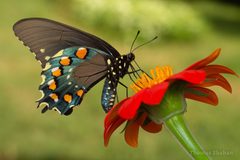
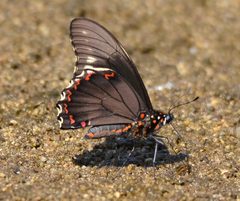
typically display dark wings with iridescent blue or green scaling on the hindwings, often with pale or orange marginal spots. The forewings are generally dark with reduced patterning. The body is relatively robust compared to other swallowtail . Larvae possess a retractable orange osmeterium used for chemical defense. within Battus can be distinguished from mimetic species (such as some Papilio) by wing venation details and the presence of continuous rather than interrupted marginal bands on the hindwings.
Images
Habitat
Primarily associated with riparian corridors, streamside vegetation, and moist woodland edges where Aristolochia vines occur. In California, occupies foothill canyons and Central Valley floor areas where California pipevine (Aristolochia californica) grows. Tropical occupy rainforest edges and disturbed with suitable host plants.
Distribution
New World distribution spanning from southern United States through Mexico, Central America, and South America to Argentina. North American reach into southern Canada. Individual species have more restricted ranges: B. philenor occurs across much of eastern and southwestern North America with disjunct in California; B. polydamas ranges from southern United States through the Neotropics.
Seasonality
periods vary by and latitude. In temperate regions, fly from late winter (February-March) through autumn (October-November), with peak abundance typically before midsummer. Tropical may fly year-round with seasonal peaks. California populations of B. philenor show bimodal flight patterns with major spring and early summer emergences.
Diet
Larvae feed exclusively on Aristolochia (pipevine) , sequestering toxic aristolochic acids from plants. nectar at diverse flowers including wild radish (Raphanus), California buckeye (Aesculus californica), Jupiter's beard (Centranthus ruber), blue dicks (Dichelostemma capitatum), Ithuriel's spear (Triteleia laxa), and yerba santa (Eriodictyon). In summer when native flowers are scarce, adults regularly visit yellow starthistle (Centaurea solstitialis).
Host Associations
- Aristolochia californica - primary larval California pipevine; sole for B. philenor in California
- Aristolochia - larval -wide association; various used by different Battus species
Life Cycle
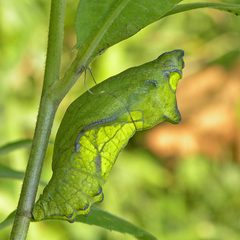
Females deposit brick-red in clusters of up to 20 on young, tender shoot tips of plants. Early-instar larvae feed gregariously on new growth; later instars disperse and feed individually on mature leaves and fruits. Larvae must move frequently between leaves as damaged foliage increases . Pupae are cryptic, either brown or green with delicate golden patterning. routinely live approximately one month. In regions with seasonal host plant dormancy, opportunistic second may occur if disturbance (fire, mechanical damage) stimulates host regrowth.
Behavior
are strong, direct fliers that actively patrol riparian corridors. Males establish territories near plants. Both sexes frequently bask with wings spread, displaying aposematic coloration. Larvars exhibit gregarious feeding in early instars, transitioning to solitary as they develop. When threatened, larvae evert the osmeterium—a forked, orange, glandular organ that emits foul-smelling compounds. Females transfer sequestered toxins to , providing chemical protection to offspring.
Ecological Role
Important of early spring and summer wildflowers in riparian . Serves as model for complexes; other swallowtail (including some Papilio) and unrelated butterflies have evolved similar color patterns to exploit avoidance learned from Battus. The specialized herbivore- relationship with Aristolochia represents a classic example of chemical . serve as indicators of riparian ecosystem health and climate change effects.
Human Relevance
Popular among enthusiasts and photographers due to conspicuous coloration and predictable occurrence near plants. B. philenor in California have been monitored for over 40 years as part of one of the world's longest continuous butterfly studies, providing valuable data on climate change and drought effects. The is considered relatively stable compared to many declining butterflies, making it a useful comparative reference in conservation studies. Larval of aristolochic acids renders inedible but not dangerous to humans.
Similar Taxa
- PapilioSome Papilio exhibit of Battus coloration; distinguished by wing venation, presence of tails in many species, and interrupted versus continuous marginal bands
- ParidesNeotropical with similar pipevine association and aposematic coloration; distinguished by distribution and subtle wing pattern differences
- EurytidesSome share dark coloration with blue or green iridescence; distinguished by wing shape and lack of continuous marginal spotting
Sources and further reading
- BugGuide
- Wikipedia
- GBIF taxonomy match
- iNaturalist taxon
- NCBI Taxonomy
- Catalogue of Life
- Pipevine Swallowtail: Battus philenor! Battus philenor! | Bug Squad
- 'Battus philenor! Battus philenor!' | Bug Squad
- Big Bioblitz Set April 29 at UC Davis: Plants, Animals and More | Bug Squad
- What Effect Did the California Drought Have on Butterflies? | Bug Squad
- Mary Louise Flint's Article in The Acorn: 'Butterflies in Decline' | Bug Squad
- How Belizean butterflies best their enemies: Polydamas Swallowtail, Battus polydamas — Bug of the Week