
Papilio machaon pikei
Sperling, 1987
Pike's Old World Swallowtail
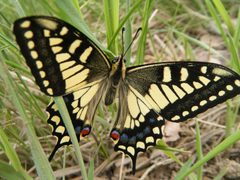
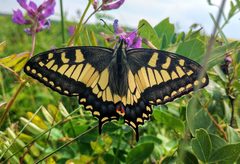
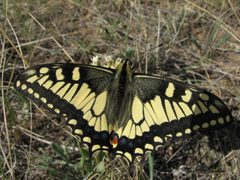
Papilio machaon pikei is a of the Old World Swallowtail, first described by Sperling in 1987. It belongs to the widespread Papilio machaon , which is one of the most recognizable butterflies across the Palearctic region. The subspecific status indicates geographic variation within the broader range, though specific distinguishing features of pikei relative to other P. machaon subspecies require detailed examination. Like other members of this species, it undergoes complete with larvae that feed on plants in the Apiaceae .
Pronunciation
How to pronounce Papilio machaon pikei: //pəˈpiːli.oʊ məˈkeɪɒn ˈpaɪkiː//
These audio files are automatically generated. While they are not always 100% accurate, they are a good starting point.
Images
Distribution
Recorded as present in Europe, the European Union, North America, Andorra, and Albania. The subspecific distribution appears to be centered in parts of southern Europe, though precise range boundaries relative to other P. machaon remain incompletely documented.
Diet
Larvae feed on plants in the Apiaceae (carrot/parsley ). For the broader Papilio machaon, larvae have been documented on over 60 plant species across Europe, with regional variation in plant use. The specific host plant preferences for the pikei subpopulation have not been separately documented.
More Details
Taxonomic note
Papilio machaon pikei was described by Sperling in 1987, making it a relatively recently recognized . The broader Papilio machaon exhibits extensive subspecific variation across its range, with numerous named subspecies in Europe, Asia, and North America. The validity and diagnostic characters of some subspecies, including pikei, may require further study using molecular and morphological data.
Sources and further reading
- BugGuide
- GBIF taxonomy match
- iNaturalist taxon
- NCBI Taxonomy
- Bird droppings, snake eyes, dead leaves: Swallowtails, Papilio spp. — Bug of the Week
- Papilionoidea | Blog
- Provisional checklist of European butterfly larval foodplants
- Parsley poacher: Black swallowtail caterpillar, Papilio polyxenes — Bug of the Week
- Swallowtail soiree - Papilio glaucus — Bug of the Week
- Swallowtail soiree – Eastern tiger swallowtail, Papilio glaucus — Bug of the Week