
Dione
Hübner, 1819
silverspot butterflies
Species Guides
2- Dione juno(Juno Silverspot)
- Dione moneta(Mexican silverspot)
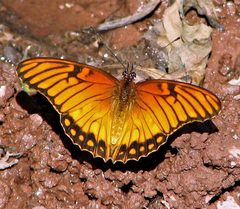
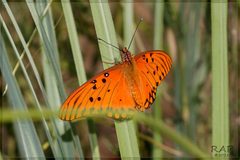
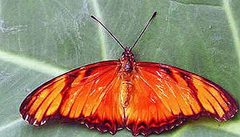
Dione is a of butterflies in the Heliconiinae, Nymphalidae, distributed from the southern United States through Central America to South America. in this genus are commonly known as butterflies due to the distinctive silver spots on the wing surfaces. The genus includes at least two recognized species: Dione moneta (Mexican Silverspot) and Dione juno (Juno Silverspot or Juno Longwing). are medium-sized butterflies with elongated wings and are frequently observed visiting flowers for nectar. Larvae feed on passion vines (Passiflora species).
Pronunciation
How to pronounce Dione: //ˈdaɪ.oʊ.ni//
These audio files are automatically generated. While they are not always 100% accurate, they are a good starting point.
Identification
Distinguished from similar Heliconiinae by the combination of elongated wing shape and large, conspicuous silver spots on the wing surface. Gulf Fritillary (Agraulis vanillae) has more rounded wings and smaller, less distinct ventral markings. Variegated Fritillary (Euptoieta claudia) lacks prominent silver spots ventrally and has more checkered pattern. Heliconius typically have longer wings, different color patterns, and lack the characteristic ventral pattern. Dione moneta has more extensive silver spotting than D. juno.
Images
Appearance
Medium-sized butterflies with elongated, somewhat angular wings. wing surfaces typically show orange-brown to reddish-brown ground color with dark markings. surfaces display the namesake特征: prominent, reflective silver spots arranged in distinct patterns. Wing margins often have dark borders. Body is slender with relatively long . is minimal.
Habitat
Occurs in diverse including tropical and subtropical woodlands, forest edges, savannas, and disturbed areas. In the United States, found in thorn scrub, riparian corridors, and open woodlands. Elevation range extends from lowlands to mid-elevation tropical woodlands (approximately 500-2000 m). Requires presence of larval plants (Passiflora ) and nectar sources.
Distribution
Southern United States (Texas, occasionally straying to Colorado, New Mexico, and Arizona) through Mexico, Central America, and South America to Brazil. Northern range limits are irregular due to vagrant individuals; established breeding occur primarily from Mexico southward.
Seasonality
are active year-round in tropical portions of the range. In the southern United States, activity occurs primarily from late spring through late fall (May-November), with multiple where breeding occurs. Vagrant individuals may appear outside typical periods.
Diet
Larvae feed exclusively on passion vines (Passiflora ). visit flowers for nectar, including wild plum (Prunus americana), composites, and other available blossoms.
Host Associations
- Passiflora - larval foodplantObligate association; larvae feed on leaves and stems
Life Cycle
Complete with four stages: , larva, pupa, . Eggs laid singly or in small clusters on plant leaves and stems. Larvae are spiny, feed gregariously or solitarily depending on and instar. occurs on or near host plant. Multiple per year in favorable climates; not reported.
Behavior
are and strong fliers. Frequently observed basking with wings open. Males patrol for females and may congregate at mud puddles or moist ground for minerals. Adults are relatively unpalatable due to of cyanogenic glycosides from larval plants, conferring protection from .
Ecological Role
serve as for various flowering plants. Larvae function as herbivores, consuming Passiflora foliage. Chemical from plants positions both larvae and adults in aposematic mimicry complexes with other Heliconiinae.
Human Relevance
Occasional attraction in gardens where passion vines are cultivated. Dione moneta is of interest to lepidopterists due to its rarity as a vagrant in the United States; the 2017 Colorado record represented a significant northward range extension. No economic importance as pest or beneficial .
Similar Taxa
- Agraulis vanillaeSimilar size and coloration, but has more rounded wings and smaller, less distinct silver markings; lacks the bold pattern of Dione
- Euptoieta claudiaOverlapping range and similar coloration, but lacks prominent silver spots and has more checkered wing pattern
- HeliconiusSame but longer, more slender wings; different color patterns (often with yellow bands or other markings); lacks characteristic pattern
More Details
Vagrancy and range expansion
Dione moneta is documented as a rare stray north of its established breeding range, with records from Colorado (2017), New Mexico (2005), and sporadic occurrences in Texas. These records likely represent individuals displaced by weather systems rather than established . Passion vines do not occur naturally in Colorado, precluding local .
Taxonomic history
The was established by Hübner in 1819. Long treated as distinct from Agraulis, though both share passion vine associations and Heliconiinae affinities. Some historical treatments have conflated Dione and Agraulis, but modern molecular and morphological studies support their separation.