
Speyeria diana
(Cramer, 1779)
Diana fritillary
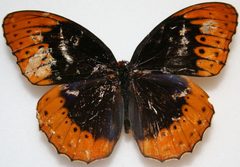
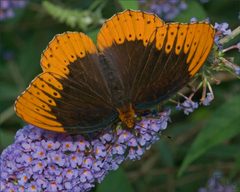
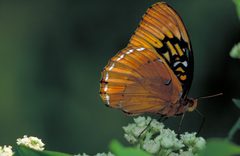
diana is a threatened in the Nymphalidae, historically distributed throughout the southeastern United States. The has undergone severe range collapse, disappearing from lowland and Atlantic coastal plain sites and now persisting in two disjunct mountainous regions: the Southern Appalachian Mountains and the Interior Highlands of Oklahoma and Arkansas. Climate change poses an existential threat, with models predicting an average loss of 91% of suitable by 2050.
Pronunciation
How to pronounce Speyeria diana: //spaɪˈɪəriə ˈdaɪənə//
These audio files are automatically generated. While they are not always 100% accurate, they are a good starting point.
Images
Habitat
Suitable for diana is now restricted to two phylogenetically disjunct high elevation regions: the Southern Appalachian Mountains (eastern ) and the Interior Highlands of Oklahoma and Arkansas (western population). The has disappeared from lowland sites and the Atlantic coastal plain where it was originally described. Populations are shifting to higher elevations at approximately 18 meters per decade.
Distribution
Currently persists in two isolated regions: (1) the Southern Appalachian Mountains across Georgia, Tennessee, South Carolina, North Carolina, and Virginia; and (2) the Interior Highlands of Oklahoma and Arkansas. Historically ranged throughout the southeastern United States including the Atlantic coastal plain. The is no longer found in the coastal plain or interior lowland sites.
Seasonality
Females have been documented emerging and being collected 4.3 days earlier per decade, indicating a phenological shift. Males, which emerge first, have not shown significant phenological shifts.
Diet
imbibe nectar from at least five of flowering plants (>11 ), with 57% of observations on milkweed (Asclepias spp.). Adults also feed on liquids from dirt roads and horse manure.
Life Cycle
Larvae feed on Viola ; 14 species of Viola have been documented in survey sites. Larvae undergo first instar , though laboratory rearing methods have been developed to bypass this diapause. Rearing studies found no evidence of plant preference among three native violet species (Viola sororia, V. pubescens, V. pedata). Males reared in captivity emerged significantly earlier than females.
Behavior
Recapture rates in mark-recapture studies ranged from 17% to 56%, suggesting somewhat limited out of suitable .
Human Relevance
The Diana fritillary is a threatened of conservation concern. Climate change modeling indicates severe range reduction, with Southern Appalachian predicted to suffer the most severe fragmentation, threatening an important source of genetic diversity. Both eastern and western populations are considered vulnerable due to geographic and genetic isolation. Habitat restoration promoting diverse larval and plants has been identified as urgently needed for conservation.
Sources and further reading
- BugGuide
- GBIF taxonomy match
- Catalogue of Life
- Of Tules, Cattails and Dragonflies...and on St. Pat's Day! | Bug Squad
- UC Davis Seminar: 'Insect Conservation in an Uncertain Future' | Bug Squad
- CLBL Event on May 15: UC Davis Medical Entomologist to Discuss Natural Mosquito Control | Bug Squad
- The Eyes Have It: How Butterflies Navigate to Suitable Habitat
- USPS Issues Butterfly Postage Stamp
- Artificial Intelligence Performs Key Step in Fruit Fly Management
- Range collapse in the Diana fritillary, Speyeria diana (Nymphalidae)
- Reproductive Behavior ofSpeyeria diana(Nymphalidae) in Arkansas
- Reproductive Behavior ofSpeyeria diana(Nymphalidae) in Arkansas
- Changes in the Geographic Distribution of the Diana Fritillary (Speyeria diana: Nymphalidae) under Forecasted Predictions of Climate Change
- Observations of Resource Use by the Threatened Diana Fritillary Butterfly (Speyeria diana) in the Southern Appalachian Mountains, USA
- A Rearing Method forArgynnis (Speyeria) diana(Lepidoptera: Nymphalidae) That Avoids Larval Diapause
- Changes in the Geographic Distribution of the Diana Fritillary (<em>Speyeria diana</em>: Nymphalidae) Under Forecasted Predictions of Climate Change