
Temenis
Hübner, 1819
Species Guides
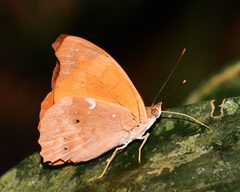
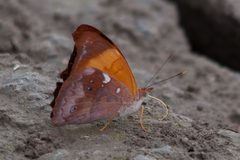
1- Temenis laothoe(Orange Banner)
Temenis is a of brush-footed butterflies (Nymphalidae) in the Biblidinae, tribe Epiphilini. It comprises three currently recognized distributed across Central and South America. The genus is distinguished from close relatives Epiphile and Nica primarily by larval , with species separable by wing pattern and shape. Members are chemically defended, sequestering toxins from their Sapindaceae plants during larval development.
Pronunciation
How to pronounce Temenis: //ˈtɛm.ə.nɪs//
These audio files are automatically generated. While they are not always 100% accurate, they are a good starting point.
Identification
Temenis are distinguished from and related by wing pattern and structure: T. laothoe has angular wings with variable patterning across its broad range; T. pulchra has distinctly rounded wings with two pinkish-red diagonal bands from the forewing to the hindwing corner; T. huebneri resembles T. laothoe in wing shape but is dark brown with a broad orange forewing band and orange hindwings. Larvae differ morphologically from related Epiphile and Nica, though specific larval diagnostic characters are not detailed in available sources. are more flattened than those of relatives.
Images
Habitat
Forest , primarily in the but frequent forest gaps to visit Sapindaceae vines and ground level to feed on rotting fruits.
Distribution
Central and South America. T. laothoe ranges from Mexico to northern Argentina, rarely straying to southern Texas (USA). T. pulchra occurs from Central America to the Andes. T. huebneri is restricted to northern and southeastern portions of Brazil's Atlantic Forest.
Diet
Larvae feed on plants in Sapindaceae, specifically Cardiospermum, Paullinia, Serjania, and Urvillea. feed on rotting fruits.
Host Associations
- Sapindaceae - larval food plant Cardiospermum, Paullinia, Serjania, Urvillea
Life Cycle
are flattened compared to relatives. Larvae mimic bird droppings or camouflage with surroundings. Pupae blend with surrounding leaves. are chemically protected due to larval of toxic compounds from plants.
Behavior
are conspicuous rather than employing cryptic 'flash and hide' seen in some relatives. They fly faster than other distasteful butterflies. They lack the and mimicry complexes present in related . Adults frequently visit forest gaps to access Sapindaceae vines and descend to ground level to feed on rotting fruit.
Ecological Role
Herbivore as larvae; chemically defended butterflies that contribute to forest . T. laothoe was identified as one of the most abundant in Yasuni National Park, Ecuadorian Amazonia.
Similar Taxa
- EpiphileClosely related in tribe Epiphilini; similar in appearance, distinguished by larval
- NicaClosely related in tribe Epiphilini; distinguished from Temenis by larval morphological differences
- CatonepheleFormerly grouped with Temenis in 'Catonephelinae'; not currently considered closely related