
Lycaena helloides
(Boisduval, 1852)
purplish copper
Lycaena helloides, commonly known as the purplish , is a North American in the Lycaenidae. It occurs across a broad range from the Great Lakes region west to British Columbia and south to Baja California. The exhibits geographic variation in number, with two generations per year across much of its range and a single generation in northern .
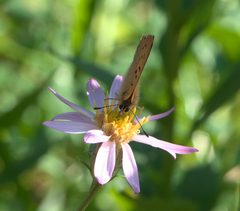
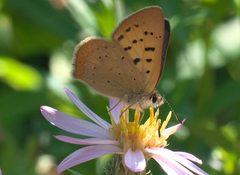
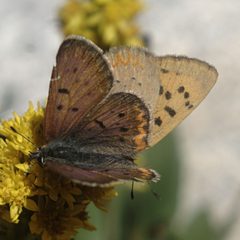
Pronunciation
How to pronounce Lycaena helloides: //lɪˈsiːnə hɛˈlɔɪdiːz//
These audio files are automatically generated. While they are not always 100% accurate, they are a good starting point.
Images
Distribution
North America from the Great Lakes area to British Columbia, south to Baja California. Specific documented locations include Alberta, Manitoba, and Saskatchewan in Canada.
Seasonality
are on wing from May to July and again from August to October in two per year across much of the range. In the northern part of the range, there is one generation with adults on wing from July to August. Some locations may support up to four generations per year.
Diet
feed on flower nectar. Larvae feed on leaves of Polygonum and Rumex , and sometimes on Potentilla species.
Life Cycle
The overwinters as an . Development includes two per year in most of the range, with up to four generations at some locations and a single generation in the northern range.
Sources and further reading
- BugGuide
- Wikipedia
- GBIF taxonomy match
- Mary Louise Flint's Article in The Acorn: 'Butterflies in Decline' | Bug Squad
- 'Climate Change' May Be a Key Factor in Declining Butterfly Populations | Bug Squad
- Over a century later, the mystery of the Alfred Wallace’s butterfly is solved | Blog
- Grassland butterflies: important indicators of the state of nature