
Sinoe chambersi
Lee, 2012
Sinoe chambersi is a small gelechiid described by Lee in 2012. It is named in honor of entomologist Vactor Tousey Chambers. The occurs across a broad latitudinal range in North America, with distinct seasonal timing between southern and northern .
Pronunciation
How to pronounce Sinoe chambersi: /ˈsaɪni ˈʃæmbərsi/
These audio files are automatically generated. While they are not always 100% accurate, they are a good starting point.
Identification
The extremely small wingspan (11.4–11.6 mm) distinguishes Sinoe chambersi from larger gelechiid moths. Geographic and seasonal patterns may aid identification: specimens collected January–March in the southern United States or March–June in Canada and the northern United States warrant consideration. Definitive identification requires examination of genitalia or molecular analysis.
Images
Appearance
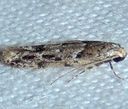
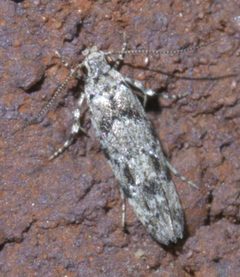
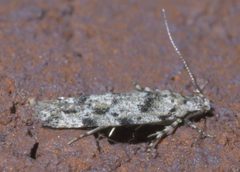
Small with wingspan of 11.4–11.6 mm. Specific coloration and pattern details are not documented in available sources.
Distribution
North America: United States (Pennsylvania south to Mississippi, and California) and Canada (Alberta to Quebec).
Seasonality
active January–March in the southern part of the range and March–June in the north. This pattern suggests a with latitude-dependent .
Human Relevance
Named for Vactor Tousey Chambers (1831–1891), an American entomologist who made significant contributions to the study of North American microlepidoptera.
Similar Taxa
- Other Sinoe species share small size and general gelechiid ; precise identification requires examination.
More Details
Etymology
The specific epithet chambersi honors Vactor Tousey Chambers, a pioneering American entomologist known for his work on microlepidoptera.
Taxonomic history
Described by Lee in 2012, with authorship sometimes cited as Lee & Brown, 2012 in NCBI records.