
Prolita sexpunctella
(Fabricius, 1794)
six-spot groundling, long-horned flat-back, groundling
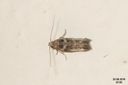
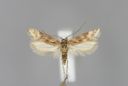
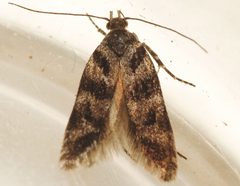
Prolita sexpunctella is a small gelechiid with a wingspan of 13–17 mm, found across Europe and North America. are active during May and June and are . The is notable for its distinctive wing pattern featuring five white fasciae on dark reddish-brown forewings. Larvae are leaf-tiers that feed on specific plants including heather and mountain avens.
Pronunciation
How to pronounce Prolita sexpunctella: /prəˈlaɪtə sɛkspʌŋkˈtɛlə/
These audio files are automatically generated. While they are not always 100% accurate, they are a good starting point.
Identification
Distinguished from similar Prolita by the specific arrangement of five white fasciae on the forewings, with the basal fascia extending along the dorsum. The elongated terminal palpal joint (as long as the second joint) is a key diagnostic feature. Day-flying in late spring helps separate it from gelechiids. Dark fuscous stigmata with first discal above plical provides additional confirmation.
Images
Habitat
Associated with open supporting larval plants: heathlands, moorlands, and alpine or subalpine zones where Dryas octopetala occurs. Larval habitat specifically involves living leaves of host plants that are spun together for shelter.
Distribution
Recorded across most of Europe and North America. Specific regional records include Belgium (including Walloon Region, Liège province, and Luxembourg province) and Denmark.
Seasonality
active from May to June. Larvae overwinter within spun leaf shelters.
Diet
Larvae feed on leaves of Calluna (including Calluna vulgaris, common heather), Empetrum nigrum (crowberry), and Dryas octopetala (mountain avens).
Host Associations
- Calluna vulgaris - larval food plantcommon heather
- Empetrum nigrum - larval food plantcrowberry
- Dryas octopetala - larval food plantmountain avens
Life Cycle
Larvae feed on plant leaves, spinning them together for shelter. occurs within these leaf shelters. presumably occurs within the larval shelter in spring, with in May–June.
Behavior
are , flying during daylight hours. Larvae construct shelters by spinning leaves together and remain within these structures through winter.
Ecological Role
Herbivore in heathland and moorland . Leaf-tying creates temporary microhabitats that may be used by other small .
Human Relevance
No significant economic or cultural importance recorded. Occasionally encountered by naturalists due to activity.
Similar Taxa
- Other Prolita speciesSimilar size and general gelechiid ; distinguished by specific wing pattern of five white fasciae and palpal proportions