Filatima serotinella
(Busck, 1903)
Filatima serotinella is a small gelechiid with dark, patterned forewings and a broad North American distribution. fly from early spring through autumn, with larvae feeding specifically on black cherry (Prunus serotina). The is recorded from 15 U.S. states and the Canadian province of Alberta.
Pronunciation
How to pronounce Filatima serotinella: /fɪˈlætɪmə ˌsɛrəʊtɪˈnɛlə/
These audio files are automatically generated. While they are not always 100% accurate, they are a good starting point.
Identification
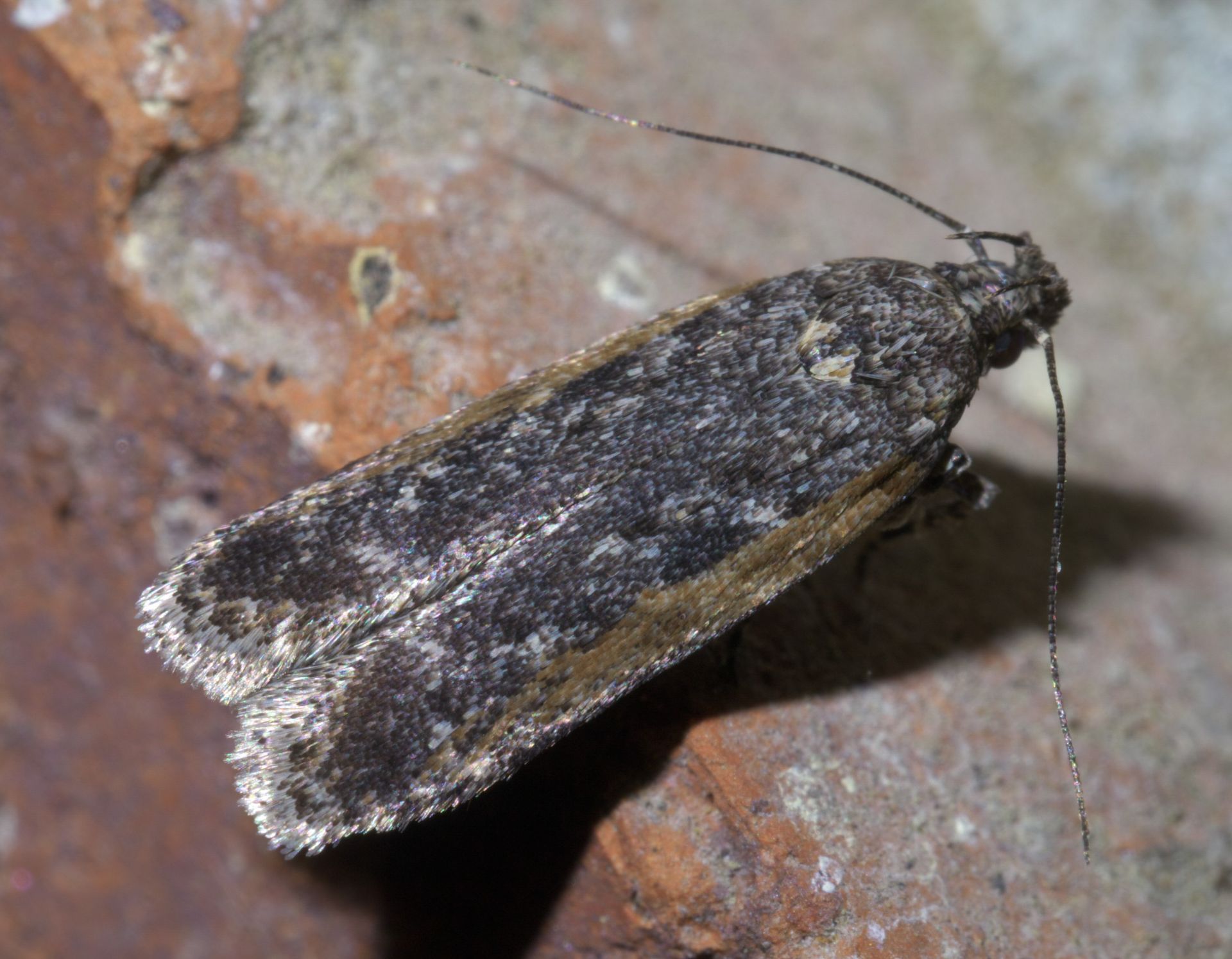
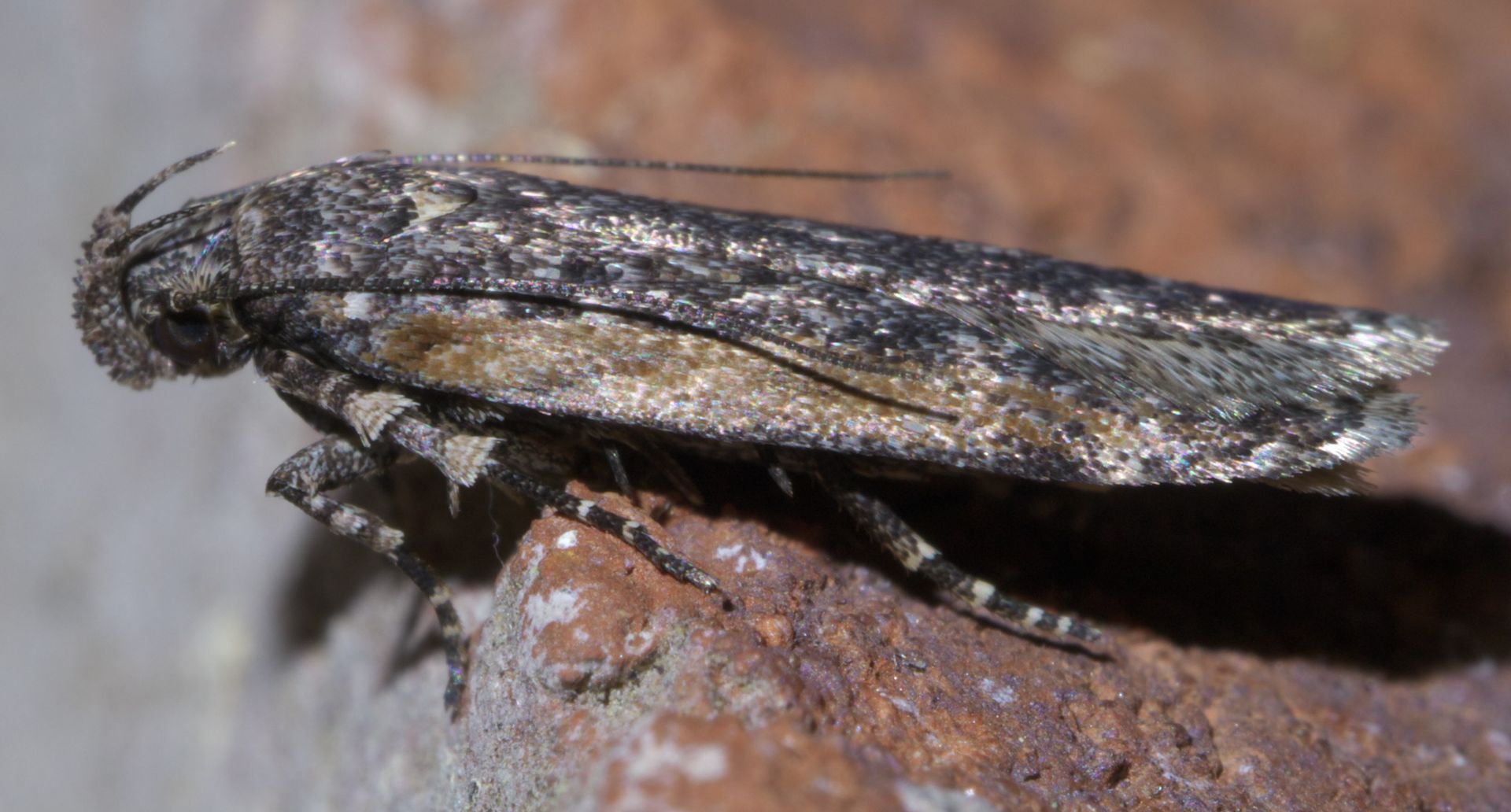
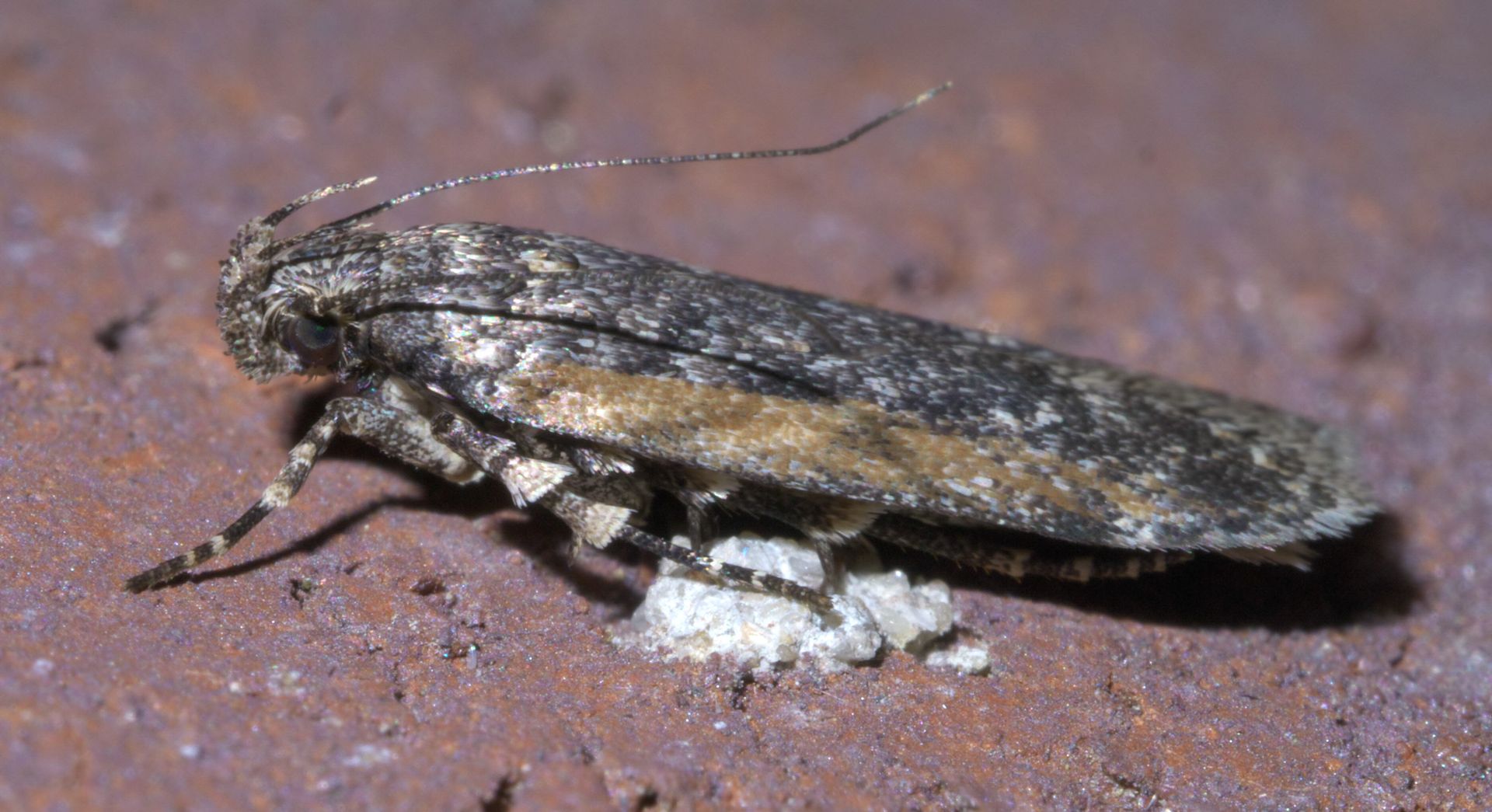
Distinguished from similar Filatima by the combination of: (1) the chocolate-brown longitudinal streak below the costal edge, and (2) the wavering interrupted white fascia connecting ill-defined costal and white spots at the fourth. The predominantly black forewing ground color with white scaling distinguishes it from paler .
Images
Appearance
Wingspan 16–21 mm. Forewings predominantly black with irregularly mixed black and white ; dark-brown scales form a narrow longitudinal streak below the costal edge, creating a chocolate-brown shade. At the fourth, white scales congregate in an ill-defined costal spot connected to an opposite white spot by a wavering, interrupted narrow white fascia. Hindwings dark shining fuscous.
Habitat
Associated with black cherry (Prunus serotina), suggesting occurrence in deciduous woodlands, forest edges, and areas where this tree grows. Specific microhabitat preferences for are not documented.
Distribution
North America: recorded from Alabama, Alberta, Arkansas, Colorado, Illinois, Indiana, Kansas, Kentucky, Louisiana, Maine, Maryland, Mississippi, South Carolina, Tennessee, Texas, and West Virginia.
Seasonality
on wing March to October, indicating multiple or an extended period across its range.
Diet
Larvae feed on Prunus serotina (black cherry). feeding habits are not documented.
Host Associations
- Prunus serotina - larval food plantblack cherry
Life Cycle
Larval stage feeds on Prunus serotina. Specific details of , pupal stages, and number of per year are not documented.
Ecological Role
Larval herbivore on black cherry; specific role in dynamics (e.g., as prey, impacts on ) is not documented.
Human Relevance
No documented economic or agricultural significance. Not known to be a pest of cultivated Prunus .
Similar Taxa
- Other Filatima speciesshare general gelechiid and dark coloration; distinguished by specific wing pattern elements (chocolate-brown costal streak, interrupted white fascia)
More Details
Taxonomic history
Described by Busck in 1903.