
Chionodes figurella
(Busck, 1912)
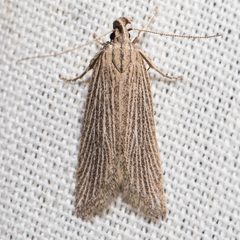
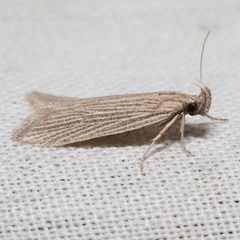
Chionodes figurella is a small gelechiid with a wingspan of 15–21 mm, distributed along the Pacific coast of North America from Washington to California and Nevada. The is recognized by its distinctive wing pattern featuring ochreous forewings obscured by stone-grey and dark ochreous scaling, with pale appearing as thin whitish lines. The larvae are known to feed on Elymus grasses, including blue wildrye (Elymus glaucus).
Pronunciation
How to pronounce Chionodes figurella: //kaɪˈoʊnəˌdiːz fɪˈɡjʊrɛlə//
These audio files are automatically generated. While they are not always 100% accurate, they are a good starting point.
Identification
Distinguished from similar Chionodes by the combination of: (1) forewings with stone-grey and dark ochreous scaling so dense that only the pale remain visible as thin whitish ochreous lines, and (2) silvery white hindwings. The specific pattern of vein-highlighting against a darkened ground color is diagnostic within the for this species.
Images
Appearance
Forewings ochreous, heavily overlaid with stone-grey and dark ochreous that completely mask the ground color except along the , which appear as thin whitish ochreous lines. Hindwings silvery white. Wingspan 15–21 mm.
Habitat
Associated with grassland and open supporting Elymus plants; specific microhabitat preferences not documented.
Distribution
North America: recorded from Washington, California, and Nevada. Distribution appears centered on the Pacific coastal and interior mountain regions of the western United States.
Diet
Larvae feed on Elymus , specifically documented on Elymus glaucus (blue wildrye). feeding habits unknown.
Host Associations
- Elymus glaucus - larval blue wildrye
- Elymus - larval -level association
Ecological Role
Larval herbivore on native grasses; specific functions not documented.
Similar Taxa
- Other Chionodes speciesMany Chionodes share similar size and general wing pattern, but C. figurella is distinguished by the specific combination of dense stone-grey and dark ochreous forewing scaling with contrasting pale lines and silvery white hindwings.
More Details
Taxonomic authority
Originally described by August Busck in 1912.
Observation rarity
iNaturalist records only 7 observations, suggesting the is infrequently encountered or underreported.