
Strobisia iridipennella
Clemens, 1860
Iridescent Strobisia Moth
Strobisia iridipennella is a micro- in the Gelechiidae, notable for its striking iridescent wing coloration. First described by James Brackenridge Clemens in 1860, this is among the smallest moths in North America, with a wingspan of approximately 1 centimeter. It inhabits the southeastern and central United States, ranging from New York south to Florida and west to Texas and Illinois, with records extending into Mexico.
Pronunciation
How to pronounce Strobisia iridipennella: /stroʊˈbiːziə ɪˌrɪdɪpəˈnɛlə/
These audio files are automatically generated. While they are not always 100% accurate, they are a good starting point.
Identification
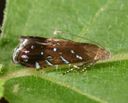
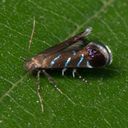
Distinguished from other small gelechiid moths by its iridescent wing coloration, described as having 'bling' by collectors. The combination of extremely small size (approximately 1 cm wingspan) and metallic wing sheen separates it from most sympatric micro-. Specific identification characters relative to in the Strobisia are not documented in available sources.
Images
Appearance
A minute with a wingspan of approximately 10 mm when wings are fully spread. The forewings display prominent iridescent or metallic coloration, which gives the its . The wings are narrow and elongated relative to body size, typical of the Gelechiidae . Body coloration and pattern details beyond the iridescent wing sheen are not well documented in available sources.
Distribution
Eastern and central North America, from New York south through Florida, west to Texas and Illinois, with southern records into Mexico. The occupies the southeastern quarter of the United States as its primary range.
Human Relevance
Featured in public outreach by the Bohart Museum of Entomology, UC Davis, where it has been used to demonstrate the diversity and aesthetic appeal of micro-. The has been nicknamed the 'Bling Moth' by museum curators due to its iridescent appearance, helping engage public interest in otherwise overlooked small moth species.
More Details
Etymology
The specific epithet iridipennella derives from Latin roots: 'iridis' (rainbow/iridescent) and 'penna' (wing), referring to the ' distinctive metallic wing coloration.