
Cosmopterix scirpicola
Hodges, 1962
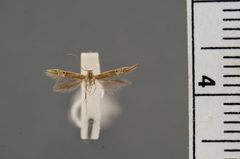
Cosmopterix scirpicola is a small in the Cosmopterigidae, described by Hodges in 1962. It is known from scattered localities across the United States, with periods varying by latitude. The is associated with Scirpus plants, on which larvae mine stems.

Pronunciation
How to pronounce Cosmopterix scirpicola: /kɔzˈmɒptərɪks sɜːrpɪˈkoʊlə/
These audio files are automatically generated. While they are not always 100% accurate, they are a good starting point.
Identification
Distinguished from other Cosmopterix by the combination of four white lines in the forewing basal area, orange-yellow transverse fascia with paired metallic golden tubercular spots on both edges, and white line. The specific pattern of metallic spots—subcostal larger than on inner edge, larger than costal on outer edge—is diagnostic. Male anal tuft brownish grey versus female white provides sex determination.
Images
Habitat
Associated with wetlands and marshy areas supporting Scirpus (bulrush) plants. Larval is within stems of host plants.
Distribution
United States: Maryland, eastern Wyoming, Florida, south-western Louisiana, California, and Alabama. Range spans eastern, central, and western continental U.S. with notable gaps in the interior.
Seasonality
active June-July in northern parts of range; late March to early June in Florida; May-June in Louisiana; late August in California. Likely (two per year).
Diet
Larvae feed on Scirpus (bulrushes), mining within stems. diet not documented.
Host Associations
- Scirpus - larval Stem miner
Life Cycle
Larval stage mines stems of Scirpus plants. presumably occurs within or near host. timing varies geographically, suggesting phenological to local conditions. Likely based on extended periods in some regions.
Behavior
are or given tendencies, though specific activity pattern not documented. Larvae are concealed feeders within stems.
Ecological Role
Larval stem mining may influence Scirpus plant growth and potentially provide entry points for secondary organisms. Specific ecological impacts not studied.
Human Relevance
No documented economic or medical significance. Occasionally encountered by wetland biologists and lepidopterists.
Similar Taxa
- Other Cosmopterix speciesShare general wing pattern elements (metallic spots, lines, fasciae) but differ in specific configuration, number of white lines, and relative size/position of metallic spots; precise forewing pattern analysis required for separation
More Details
Taxonomic authority
Described by Ronald B. Hodges in 1962 as part of his revisionary work on New World Cosmopterigidae.
Flight period variation
The substantial geographic variation in timing (March-August across range) suggests local to and temperature regimes, with possible partial voltinism variation.