
Deidamia inscriptum
Harris, 1839
Lettered Sphinx
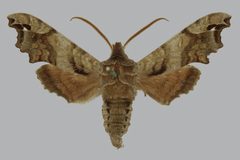
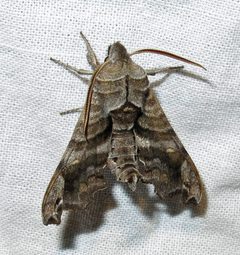
Deidamia inscriptum, commonly known as the Lettered Sphinx, is a in the Sphingidae. It is the sole member of its . The species was first described by Thaddeus William Harris in 1839, with the genus erected by James Brackenridge Clemens in 1859. It is distributed across eastern North America.
Pronunciation
How to pronounce Deidamia inscriptum: //daɪˈdeɪmiə ɪnˈskrɪptəm//
These audio files are automatically generated. While they are not always 100% accurate, they are a good starting point.
Identification
Distinguished from other Sphingidae by its placement as the only in Deidamia. The specific epithet 'inscriptum' and 'Lettered Sphinx' suggest patterned or marked wing features, though precise diagnostic characters require additional sources.
Images
Appearance
have a wingspan of 45–70 mm. Specific coloration and pattern details are not provided in available sources.
Distribution
Eastern North America: recorded from Florida to Mississippi, and in Michigan, Wisconsin, South Carolina, Vermont, Ontario, and Quebec.
Diet
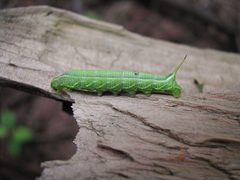
Larvae feed on Vitis, Ampelopsis, and Parthenocissus (grape plants). feeding habits are not documented in available sources.
Host Associations
- Vitis - larval food plant of grape vines
- Ampelopsis - larval food plant of pepper vines
- Parthenocissus - larval food plant of creeper vines including Virginia creeper
More Details
Taxonomic uniqueness
Deidamia inscriptum is the only in the Deidamia, making it taxonomically distinctive within the Sphingidae .
Nomenclature history
described by Harris in 1839; erected by Clemens in 1859.