
Pygodasis ephippium
Saddleback Scoliid Wasp
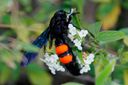
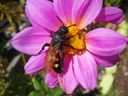
A large scoliid reaching approximately 4 cm in length, with striking black and orange coloration. Males possess long , slender bodies, and a conspicuous pseudostinger at the tip; females are more robust with shorter antennae and a functional retractable stinger. The has been recorded as a of scarab beetle and as a flower visitor. Originally known from south Texas south to Ecuador, with more recent records from Arizona and Panama.
Pronunciation
How to pronounce Pygodasis ephippium: /piːɡoʊˈdeɪsɪs ɛˈfɪpiəm/
These audio files are automatically generated. While they are not always 100% accurate, they are a good starting point.
Identification
Males distinguished by long , relatively slender body, and pseudostinger at ; females more robust with shorter antennae and functional retractable stinger. Black body with orange abdomen. Approximately 4 cm length. Punctures on and propodeum, specific wing venation patterns, and body setae used for definitive identification.
Images
Habitat
Found on flowers, including Desert Lavender (Hyptis emoryi), Coreocarpus arizonicus, and Brassica nigra. In Panama, observed near vegetable crops.
Distribution
United States: south Texas, Arizona (Sabino Canyon Recreation Area, Miller Canyon); south through Mesoamerica to Ecuador. Panama: Chiriquí province (Cerro Punta and other localities), Coclé province, Panamá province.
Seasonality
Observed in mid-December in Arizona; December in Panama.
Host Associations
- scarab beetle grubs - Female sting into brief paralysis, lay single on larva; wasp larva feeds externally on grub, invariably killing
Behavior
Female dig up scarab beetle using heavy, spiny legs, sting them into brief paralysis, and oviposit on the . The grub eventually recovers motor function and resumes feeding until the wasp larva kills it. Males observed feeding on flower nectar alongside butterflies.
Ecological Role
of scarab beetle larvae; flower visitor and .
Human Relevance
Venomous sting capable of inflicting painful bites on humans. Occasionally encountered in recreational areas and near agricultural settings.
Similar Taxa
- Campsomeris toltecaSympatric in Arizona; males observed feeding together on same flower ; distinguished by specific coloration and structural characters requiring close examination