
Megachile apicalis
Spinola, 1808
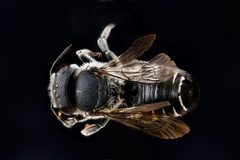
Megachile apicalis is a solitary leaf-cutter in the Megachilidae, first described by Spinola in 1808. It is native to Europe and the Mediterranean region, with introduced established in North America. Research on this has examined relationships between female body size and components including , size, and nest usurpation .


Pronunciation
How to pronounce Megachile apicalis: //ˌmɛɡəˈkaɪli əˌpɪˈkælɪs//
These audio files are automatically generated. While they are not always 100% accurate, they are a good starting point.
Images
Habitat
Artificial nesting sites in field settings have been used to study this , suggesting it occupies environments where such nesting opportunities exist. As a leaf-cutter , it likely requires access to vegetation for leaf material collection and suitable cavities for nest construction.
Distribution
Native to Europe and the Mediterranean region. Introduced to North America, where it has been reported. GBIF records indicate presence in Africa, Europe and Northern Asia (excluding China), with distribution records noting presence in Africa and Europe/Northern Asia.
Behavior
Females exhibit nest usurpation , with larger females demonstrating greater capacity to usurp nests than smaller females. Larger females produce faster and achieve greater realized .
More Details
Female size-fitness relationships
Research has documented that female body size significantly affects multiple components: (larger females produce more offspring), size (larger females lay larger eggs), investment per progeny (larger females invest more per offspring as measured by weight), and competitive ability (larger females are more successful at nest usurpation). However, female size does not significantly affect longevity or sex ratio of progeny.
Sources and further reading
- BugGuide
- Wikipedia
- GBIF taxonomy match
- iNaturalist taxon
- NCBI Taxonomy
- Catalogue of Life
- Looking for Cheap Urban Real Estate | Bug Squad
- In Search of the World's Biggest Bee: How It Came to 'Bee' | Bug Squad
- Photographer Allan Jones Exudes Patience, Skill and Talent | Bug Squad
- The Most Incredible Image of a Leafcutter Bee | Bug Squad
- The Native Bees in the UC Davis Bee Haven | Bug Squad
- Mailbox posts are fine homes for giant resin bees, Megachile sculpturalis — Bug of the Week
- Female size and fitness in the leaf‐cutter bee Megachile apicalis