
Mesoleptus
Gravenhorst, 1829
Species Guides
1Mesoleptus is a of parasitic in the Ichneumonidae. The genus contains over 200 , with 172 described by German entomologist Arnold Förster. A proposed new species, Mesoleptus hibernica, was announced in 2008 from Ireland but remains unpublished and therefore not validly described.

Pronunciation
How to pronounce Mesoleptus: //mɛˈsɔlɛptəs//
These audio files are automatically generated. While they are not always 100% accurate, they are a good starting point.
Identification
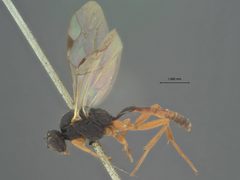
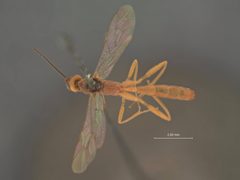
Distinguished from similar ichneumonid by the combination of: reduced or absent wing cellules, humped , and long slender that are typically curved. The narrowed petiole and oblong smooth are additional diagnostic features. -level identification requires examination of minute morphological characters.
Images
Appearance
long, slender, and usually curved. short and narrow with oval, slightly protruding . somewhat humped with small wings. Wing cellules (enclosed areas between ) very small or entirely absent. oblong, smooth, with narrowed petiole. Legs slender and long; hind leg sometimes thickened.
Distribution
Wide geographic distribution with confirmed records from Denmark (DK), Norway (NO), and Sweden (SE). The occurs across multiple biogeographic regions based on .
Ecological Role
; members of this are presumed to parasitize other insects, though specific relationships are not documented in available sources.
Similar Taxa
- Other Ichneumonidae generaMesoleptus can be distinguished by the near-absence of wing cellules and the characteristic humped , features not shared by most related .
Misconceptions
Mesoleptus hibernica has been cited in some sources as a valid name, but it remains a (unpublished name) and is not formally recognized.
More Details
Taxonomic history
The has a substantial taxonomic history with the majority of its (172 of 215) described by Arnold Förster of Aachen, Germany, indicating intensive 19th-century study of the group.