
Ambloplisus
Heinrich, 1930
Species Guides
1Ambloplisus is a of ichneumon wasps in the Ichneumonidae, described by Heinrich in 1930. The genus belongs to the diverse family, whose members are primarily known for laying in or on other insects. Records for this genus are sparse, with limited published information on its and . The genus has been documented through a small number of observations on iNaturalist, suggesting it is rarely encountered or underreported.
Pronunciation
How to pronounce Ambloplisus: /æmˈbloʊplɪsəs/
These audio files are automatically generated. While they are not always 100% accurate, they are a good starting point.
Identification
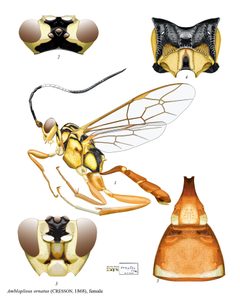
Ambloplisus can be distinguished from other ichneumonid by the combination of morphological characters established in Heinrich's 1930 description, though specific diagnostic features are not readily accessible in widely available literature. As with many ichneumonid genera, identification to genus level requires examination of wing venation, structure, and abdominal segmentation patterns. Specimens should be compared against the original description or verified against type material for confident identification.
Images
Distribution
The has been recorded from North America based on available taxonomic literature, though precise range boundaries are not well documented. iNaturalist observations suggest occurrence in the United States.
Ecological Role
As a member of Ichneumonidae, Ambloplisus likely functions as a , with larvae developing at the expense of insects. This ecological role contributes to of potential pest within its .
Similar Taxa
- Other Ichneumonidae generaMany ichneumonid share general body plan and coloration; Ambloplisus requires careful morphological examination to separate from related genera within the same or tribe.
More Details
Taxonomic history
The was established by Heinrich in 1930. The original description and subsequent taxonomic treatments are not widely digitized, limiting accessibility of diagnostic information.
Data limitations
The has only 30 observations on iNaturalist as of the data cutoff, indicating either genuine rarity, cryptic habits, or undercollection. No -level treatments are readily available in major online databases.