
Limonethe maurator
(Brulle, 1846)
Limonethe maurator is a of ichneumon in the Ichneumonidae. It is one of many ichneumon wasp species documented in North American urban and suburban environments. The species has been recorded in the central United States, including Kansas. Like other ichneumon wasps, females possess a visible ovipositor used for laying .
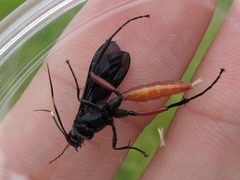
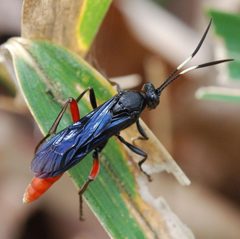

Pronunciation
How to pronounce Limonethe maurator: //ˌlaɪməˈniːθ ˌmɔːrəˈtɔr//
These audio files are automatically generated. While they are not always 100% accurate, they are a good starting point.
Identification
Specific diagnostic features for distinguishing Limonethe maurator from other Limonethe and similar ichneumonid wasps are not documented in available sources. The Limonethe is part of the diverse Ichneumonidae , whose species-level identification typically requires examination of wing venation, structure, and other microscopic features.
Images
Habitat
Has been observed in residential areas and urban-adjacent environments in the central United States. The broader is associated with wooded and semi-open where organisms occur.
Distribution
Documented from the central United States, specifically Kansas. The was described by Brulle in 1846, suggesting a broader North American range, but specific distribution records beyond the central U.S. are not confirmed in available sources.
Seasonality
have been observed in late April in Kansas, suggesting spring activity. Broader seasonal patterns are not documented.
Life Cycle
As with other ichneumonid wasps, development is parasitoidal, with larvae feeding internally on organisms. Specific host and details for L. maurator are not documented.
Behavior
Females use their ovipositor to deposit into organisms. Specific behavioral observations for this are not recorded.
Ecological Role
Functions as a , contributing to of its . The specific ecological impact is unknown due to undocumented host relationships.
Human Relevance
Documented during citizen science events such as the City Nature Challenge, contributing to biodiversity monitoring. No known direct economic or medical significance.
Similar Taxa
- Other Limonethe speciesCongeneric share general ichneumonid ; identification to species level requires detailed morphological examination not specified in available sources.
- Other female ichneumonid wasps with prominent ovipositorsMany ichneumonid females exhibit similar body plans with elongated ovipositors; and determination requires identification.
More Details
Taxonomic history
Originally described by Brulle in 1846. The Limonethe is part of the megadiverse Ichneumonidae, which contains tens of thousands of described with many remaining undescribed.
Citizen science documentation
The has been documented through iNaturalist, with over 2,000 observations recorded platform-wide as of source date. Individual observations have been verified by multiple identifiers.