
Acroricnus
Ratzeburg, 1852
Species Guides
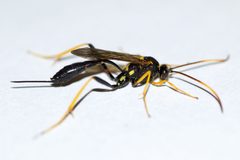
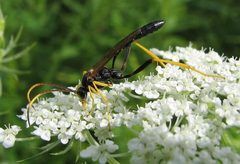
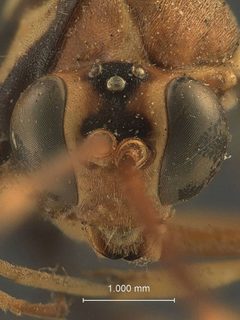
1Acroricnus is a of ichneumonid wasps that parasitize mud-dauber wasps ( Sphecidae). At least one , A. seductor, has been studied for its detection and acts as a kleptoparasitoid, consuming spider prey and young host larvae in mud-dauber nests. The genus includes eight described species distributed across multiple continents.
Pronunciation
How to pronounce Acroricnus: //æˈkɹoʊ.ɹɪk.nus//
These audio files are automatically generated. While they are not always 100% accurate, they are a good starting point.
Images
Habitat
Associated with mud-dauber nests, including sheltered locations inside human buildings and unsheltered outdoor nests. Has been observed in where mud-daubers (Sceliphron caementarium) construct their mud nests.
Distribution
Records from Denmark (DK), Norway (NO), and Sweden (SE). within the have broader distributions: A. japonicus occurs in Japan, A. cubensis in Cuba, and A. ambulator, A. nigriscutellatus, A. peronatus, A. seductor, A. stylator, and A. tricolor have various distributions.
Host Associations
- mud-dauber wasps (Hymenoptera: Sphecidae) - Specifically Sceliphron caementarium documented for A. seductor. Acts as kleptoparasitoid, consuming spider prey and young larvae.
Behavior
Females detect nests by tapping the nest surface with their . Upon locating a suitable , the female inserts her ovipositor through the mud wall, possibly using a mud-softening secretion. Evidence suggests use of echolocation for host detection, supported by modified antennal tips and thickened fore tibiae in females.
Ecological Role
Natural enemy and of mud-dauber wasps. Acts as kleptoparasitoid within nests. Approximately half of host nests may suffer at a given site, with no significant difference between sheltered and unsheltered nests.
Similar Taxa
- OsprynchotusAlso ichneumonid of mud-daubers; mentioned alongside Acroricnus as enemies of Sceliphron caementarium
- Chrysididae (cuckoo wasps)Different but also of mud-daubers; can be distinguished by metallic coloration and different parasitoid strategy ( laid in rather than through mud wall)
More Details
Species list
Eight recognized: A. ambulator, A. cubensis, A. japonicus, A. nigriscutellatus, A. peronatus, A. seductor, A. stylator, A. tricolor
Parasitism patterns
Study of A. seductor found no correlation between nest size and rate, nor between size and likelihood of parasitism
Sources and further reading
- BugGuide
- Wikipedia
- GBIF taxonomy match
- iNaturalist taxon
- NCBI Taxonomy
- Catalogue of Life
- Bug Eric: Wasp Wednesday: Black & Yellow Mud Dauber
- Bug Eric: August 2011
- Host detection and rate of parasitism by Acroricnus seductor (Hymenoptera: Ichneumonidae), a natural enemy of mud-dauber wasps (Hymenoptera: Sphecidae)