
Idiolispa aestivalis
Townes, 1962
Idiolispa aestivalis is a of ichneumon described by Townes in 1962. It belongs to the Ichneumonidae, one of the largest families of wasps. The Idiolispa is a small and poorly known group within this family. The specific epithet 'aestivalis' suggests summer activity, though this has not been formally documented.
Pronunciation
How to pronounce Idiolispa aestivalis: /ˌɪdɪoʊˈlɪspə ˌiːstɪˈveɪlɪs/
These audio files are automatically generated. While they are not always 100% accurate, they are a good starting point.
Identification
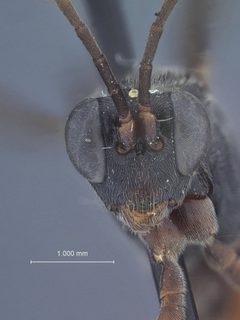
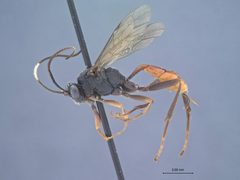
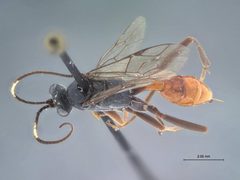
Idiolispa are characterized by distinctive wing venation patterns and reduced wing structures that separate them from related ichneumonid . I. aestivalis specifically can be distinguished by the combination of features described in the original description: notably the structure of the areolet and the form of the petiolar sternite. Specimens require microscopic examination for reliable identification.
Images
Distribution
The is known from North America, with records from the United States. Specific locality data is limited due to the rarity of collection records.
Ecological Role
As a member of Ichneumonidae, this is presumed to be a of other insects, though the specific or hosts remain unknown. The is predominantly parasitoidal on larval Lepidoptera, Coleoptera, or .
Similar Taxa
- Idiolispa anomalipesCongeneric described in the same revision by Townes; differs in leg coloration and propodeal patterns.
- Other Ichneumonidae in subfamily CtenopelmatinaeSimilar general body plan and wing venation; Idiolispa is distinguished by the unique reduction of the areolet and the elongated second tergite.
More Details
Taxonomic history
Idiolispa was established by Townes in 1962 as part of his comprehensive revision of the Ichneumonidae. The name derives from Greek 'idios' (distinct, peculiar) and 'lispa' (a smooth or polished appearance), referring to the relatively smooth and shiny characteristic of the group.
Collection rarity
With only 11 observations recorded on iNaturalist and limited museum specimen records, I. aestivalis appears to be genuinely rare or undercollected. This may reflect genuine rarity, cryptic habits, or collection against small, non-mimetic ichneumonids.