
Agathilla
Westwood, 1882
Species Guides
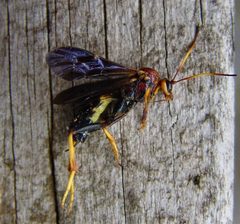
1Agathilla is a of in the Ichneumonidae, established by Westwood in 1882. It belongs to the diverse superfamily Ichneumonoidea, which contains thousands of that parasitize other insects. Members of this genus are small to medium-sized wasps with the characteristic slender body and long typical of ichneumonids. The genus is rarely encountered and poorly documented in scientific literature.
Pronunciation
How to pronounce Agathilla: /ˌaɡəˈθɪlə/
These audio files are automatically generated. While they are not always 100% accurate, they are a good starting point.
Identification
No reliable distinguishing features have been documented for this . Identification to genus level within Ichneumonidae generally requires examination of wing venation patterns, structure, and abdominal petiole under magnification. Specimens should be compared against type material or authoritative keys.
Images
Distribution
Distribution records are sparse. The has been documented from limited localities, but precise range boundaries remain undefined due to low collection rates and taxonomic obscurity.
Ecological Role
As a member of Ichneumonidae, in this are presumed to function as of other insects, though specific relationships remain undocumented. Parasitoid in this typically attack stages of Lepidoptera, Coleoptera, or other Hymenoptera.
Similar Taxa
- Other small Ichneumonidae generaNumerous within Ichneumonidae share the general body plan of slender with long . Differentiation requires detailed morphological examination and reference to specialized taxonomic literature.
More Details
Taxonomic obscurity
Agathilla is among the many poorly studied in Ichneumonidae. The contains over 25,000 described with estimates suggesting hundreds of thousands remain undescribed. Genera with few records often lack modern revisions, making identification and biological study difficult.