
Pseudognaptodon
Fischer, 1965
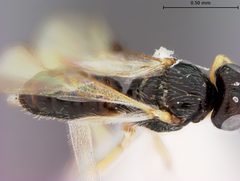
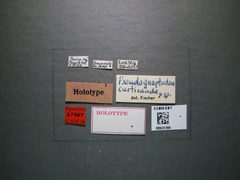
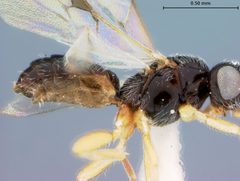
Pseudognaptodon is a of in the Braconidae, first described by Fischer in 1965. The genus belongs to the Microgastrinae, a diverse group of koinobiont endoparasitoids that attack Lepidoptera larvae. Very little is known about the of this genus, and no -level identifications are commonly reported. The name suggests a relationship to the genus Gnaptodon, though the precise morphological distinction between these requires examination of .
Pronunciation
How to pronounce Pseudognaptodon: //ˌsjuːdəʊˈɡnæptədɒn//
These audio files are automatically generated. While they are not always 100% accurate, they are a good starting point.
Images
Distribution
Known from the northeastern United States, with published records from Vermont. The likely has a broader distribution in North America, but precise range boundaries are undocumented due to limited collecting and identification effort.
Ecological Role
As a member of Braconidae (Microgastrinae), Pseudognaptodon likely functions as a koinobiont endoparasitoid of lepidopteran larvae, contributing to natural regulation of and . This ecological role is inferred from -level but has not been confirmed by direct records for this .
Similar Taxa
- GnaptodonClosely related with similar ; Pseudognaptodon was established to accommodate previously or potentially misassigned to Gnaptodon. Separation depends on subtle characters of the propodeum and metasomal tergites.
- Other Microgastrinae generaMany Microgastrinae are distinguished by minor variations in wing venation, tergite , and ovipositor structure. Pseudognaptodon requires expert examination to distinguish from these.
More Details
Taxonomic note
Pseudognaptodon is one of numerous small within Microgastrinae that remain poorly characterized. The original description by Fischer (1965) established the genus based on morphological distinctions from Gnaptodon, but subsequent taxonomic revisions have been limited. No comprehensive phylogenetic analysis has included this genus.
Research needs
Basic biological data including associations, complete inventory, and diagnostic characters for species identification are lacking. Fresh collections with associated host data and would significantly improve understanding of this .