
Macrocentrus marginator
(Nees, 1811)
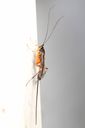
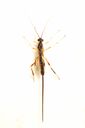
Macrocentrus marginator is a of in the Braconidae, a large group of wasps that develop as parasitoids of other insects. The species was first described by Christian Gottfried Daniel Nees von Esenbeck in 1811. Records indicate presence in Scandinavia, specifically Denmark, Norway, and Sweden. As a member of Macrocentrus, it likely functions as a larval parasitoid, though specific associations for this species remain poorly documented.
Pronunciation
How to pronounce Macrocentrus marginator: /ˌmækroʊˈsɛntrəs ˌmɑːrdʒɪˈneɪtər/
These audio files are automatically generated. While they are not always 100% accurate, they are a good starting point.
Identification
Distinguishing Macrocentrus marginator from other Macrocentrus requires examination of morphological characters such as wing venation, segment count, and body proportions. Species-level identification in this typically depends on detailed examination of the ovipositor, propodeum , and coloration patterns. Reference to specialized taxonomic keys for European Braconidae is necessary for reliable identification.
Images
Distribution
Recorded from Denmark, Norway, and Sweden. The limited distribution records suggest a European, possibly boreonemoral or hemiboreal range, though sampling may affect this pattern.
Ecological Role
As a member of Braconidae, functions as a , contributing to of insects. The specific ecological role of this is undocumented.
Similar Taxa
- Macrocentrus cingulumSimilar members with overlapping Palearctic distribution; distinguished by differences in wing venation and body coloration.
- Macrocentrus linearisCongeneric with comparable size range; separation requires examination of antennal segment proportions and tarsal claw structure.
More Details
Taxonomic Note
Authority cited as 1811 in GBIF and Catalogue of Life, but 1812 in NCBI; this discrepancy reflects historical publication dating conventions for Nees's work 'Ichneumonides Admirantes'.