
Sphecodes aroniae
Mitchell, 1960
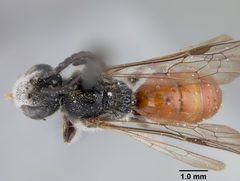
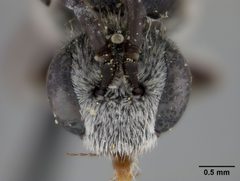
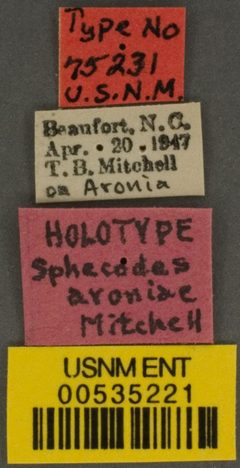
Sphecodes aroniae is a of sweat bee in the Halictidae. It belongs to a of cleptoparasitic bees commonly known as blood bees, which lay in the nests of other solitary bees. The species was described by Mitchell in 1960 and is known from North America, with confirmed records from Vermont, United States.
Pronunciation
How to pronounce Sphecodes aroniae: //sfiˈkoʊdiːz əˈroʊni.aɪ//
These audio files are automatically generated. While they are not always 100% accurate, they are a good starting point.
Images
Distribution
North America; specifically recorded from Vermont, United States.
Host Associations
- Solitary sweat bees (Halictidae) - Sphecodes are known to parasitize nests of other Halictidae, though specific records for S. aroniae are not documented in available sources.
Behavior
Ecological Role
Acts as a in , potentially influencing of sweat bee .
Similar Taxa
- Other Sphecodes speciesConvergent cleptoparasitic including slender -like appearance, red and black coloration, and reduced scopa (pollen-collecting hairs). Specific identification requires examination of morphological details.
- Nomada speciesBoth are cleptoparasitic bees with -like appearance. Nomada typically parasitize Andrenidae, while Sphecodes species parasitize Halictidae.
More Details
Taxonomic note
The specific epithet 'aroniae' likely refers to Aronia (chokeberries), suggesting a possible association with plants in this , though this has not been confirmed in available literature.
Sources and further reading
- BugGuide
- Wikipedia
- GBIF taxonomy match
- iNaturalist taxon
- NCBI Taxonomy
- Catalogue of Life
- The Native Bees in the UC Davis Bee Haven | Bug Squad
- Cuckoo! Cuckoo! Cuckoo! | Bug Squad
- Not-so Solitary Bees - Buglife Blog - Buglife
- From Bugs to Brains.…and….From Green Spaces to Better Mental Well-Being - Buglife Blog - Buglife