
Lasioglossum titusi
(Crawford, 1902)
Titus's Sweat Bee, Titus' Lasioglossum
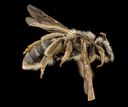
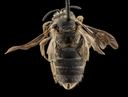
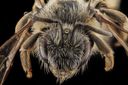
Lasioglossum titusi is a solitary sweat bee in the Halictidae, native to North America. It is a ground-nesting that excavates burrows in flat, bare soil, often forming nest with multiple individuals nesting in close proximity. As a polylectic species, it collects pollen from a wide variety of flowering plants rather than specializing on a single . The species is part of the largest of bees, Lasioglossum, which contains over 1,700 species globally.
Pronunciation
How to pronounce Lasioglossum titusi: //ˌlæsi.oʊˈɡlɒsəm ˈtɪtjuːsaɪ//
These audio files are automatically generated. While they are not always 100% accurate, they are a good starting point.
Images
Habitat
Nests in flat, bare ground with exposed soil. Nest have been observed where multiple individuals establish burrows in close proximity.
Distribution
North America, with records from Middle America. Specific range details within these regions are not well documented in available sources.
Diet
Polylectic pollen collector, gathering pollen from a wide variety of plant rather than specializing on particular .
Life Cycle
Solitary nesting with females excavating individual burrows in soil. Nests may be aggregated, with multiple females nesting in the same general area.
Behavior
Females excavate soil burrows for nesting. Males have been observed visiting flowers, including White Prairie Clover (Dalea candida), where they may seek nectar and mating opportunities with foraging females.
Ecological Role
. As a polylectic , contributes to pollination of diverse flowering plants. Part of the broader wild that provides services, though like most wild bees, represents a minor component of overall crop pollination services relative to a small number of .
More Details
Taxonomic Context
Lasioglossum is the largest of bees, containing over 1,700 . L. titusi belongs to the subgenus Dialictus, a large and taxonomically challenging group of small sweat bees that are frequently captured in bowl traps and often require expert identification.
Nesting Biology
Ground-nesting in the Lasioglossum typically involves females excavating vertical or angled burrows with lateral provisioned with pollen and nectar. Nest is common in many , though the degree of social in L. titusi specifically has not been documented.
Sources and further reading
- BugGuide
- Wikipedia
- GBIF taxonomy match
- iNaturalist taxon
- NCBI Taxonomy
- Catalogue of Life
- Just inTime for Pollinator Week | Bug Squad
- Bug Eric: Don't Sweat 'em
- Back-Seat Driver: The Parasite That Makes Bees Drop Off Its Babies
- Building a Better Bee Trap: Researchers Say Bee Bowls Are Overused
- Bug Eric: White Prairie Clover: An Awesome Blossom
- Not-so Solitary Bees - Buglife Blog - Buglife