
Lasioglossum pruinosum
(Robertson, 1892)
hoary sweat bee
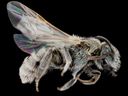
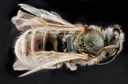
Lasioglossum pruinosum is a small sweat bee in the Halictidae, commonly known as the hoary sweat bee. Like other members of the Lasioglossum, it is a ground-nesting solitary or semi-social . The is documented in North America and is one of many small halictid bees frequently captured in bowl trap surveys, though specific ecological details for this species remain limited.
Pronunciation
How to pronounce Lasioglossum pruinosum: //ˌlæ.si.oʊˈɡlɒsəm prʊˈaɪnəsəm//
These audio files are automatically generated. While they are not always 100% accurate, they are a good starting point.
Images
Distribution
North America. Distribution records indicate presence across the continent, though specific range boundaries are not well documented.
Behavior
As a member of the subgenus Dialictus within Lasioglossum, this likely exhibits solitary or weakly social nesting with females excavating burrows in soil. Males have been observed patrolling flowers, including prairie clovers (Dalea species), where they seek nectar and mating opportunities with foraging females.
Ecological Role
. As a sweat bee, this contributes to pollination of flowering plants, including prairie clovers and other native flora. Like many small halictid bees, it is part of the diverse wild that provides services, though it is not among the crop-pollinating species.
Human Relevance
Minimal direct economic importance. The may be encountered by entomologists in monitoring surveys using bowl traps, where Lasioglossum species are frequently captured in large numbers. Not known to be aggressive; females can sting if handled but males are harmless.
Similar Taxa
- Other Lasioglossum (Dialictus) speciesThe subgenus Dialictus contains numerous small, morphologically similar that are difficult to distinguish without microscopic examination. Many are frequently misidentified or grouped together in ecological studies.
- Lasioglossum calceatum (Common Furrow Bee)Another small halictid with similar size and ground-nesting , though this is more social and produces , unlike most Dialictus.
More Details
Research and Monitoring Context
Lasioglossum pruinosum is representative of a broader issue in research: bowl traps frequently capture large numbers of small halictid bees including many Lasioglossum , potentially skewing diversity estimates and creating identification bottlenecks due to the taxonomic difficulty of the . Researchers have urged caution in interpreting bowl trap data for this reason.
Sources and further reading
- BugGuide
- Wikipedia
- GBIF taxonomy match
- iNaturalist taxon
- NCBI Taxonomy
- Catalogue of Life
- Just inTime for Pollinator Week | Bug Squad
- Bug Eric: Don't Sweat 'em
- Back-Seat Driver: The Parasite That Makes Bees Drop Off Its Babies
- Building a Better Bee Trap: Researchers Say Bee Bowls Are Overused
- Bug Eric: White Prairie Clover: An Awesome Blossom
- Not-so Solitary Bees - Buglife Blog - Buglife