
Lasioglossum admirandum
(Sandhouse, 1924)
Admirable Sweat Bee
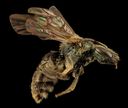
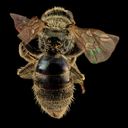
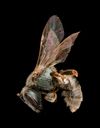
Lasioglossum admirandum is a small sweat bee in the subgenus Dialictus, one of 84 metallic Dialictus revised for Canada. Originally described by Sandhouse in 1924, it was synonymized with D. perspicuus before being restored as the senior synonym. Like other Dialictus, it belongs to the most commonly collected group in North America and exhibits diverse social systems. The species is part of the largest bee globally, with over 1,700 Lasioglossum species worldwide.
Pronunciation
How to pronounce Lasioglossum admirandum: /ˌlæsi.oʊˈɡlɒsəm ædˈmɪrændəm/
These audio files are automatically generated. While they are not always 100% accurate, they are a good starting point.
Identification
Identification of L. admirandum requires microscopic examination and reference to the diagnostic keys provided in Gibbs (2010), which separates it from 83 other metallic Dialictus in Canada. The subgenus Dialictus is taxonomically challenging, with species distinguished by subtle morphological characters including punctation patterns, genitalia structure, and subtle coloration differences. L. admirandum is distinguished from its junior synonym D. perspicuus through characters detailed in the revision.
Images
Distribution
North America; recorded from Vermont, United States. The occurs within the Canadian fauna as documented in the comprehensive revision of metallic Dialictus.
Ecological Role
As a member of the Lasioglossum, this contributes to wild pollination services. The subgenus Dialictus is among the most abundant and commonly collected bees in North America, suggesting significant function. However, specific ecological contributions of L. admirandum are not documented separately from the broader genus.
Human Relevance
L. admirandum exemplifies the taxonomic challenges of the hyperdiverse Lasioglossum, which frequently dominates bowl trap in monitoring studies. The difficulty of identifying these small halictids to level creates substantial burdens for bee researchers and monitoring programs, potentially skewing diversity estimates and requiring specialized taxonomic expertise.
Similar Taxa
- Lasioglossum perspicuus (Knerer and Atwood)Junior synonym of L. admirandum; previously described as separate before synonymy was established in Gibbs (2010).
- Other Lasioglossum (Dialictus) speciesThe subgenus contains 84 metallic in Canada alone, many with subtle morphological differences requiring expert keys for separation.
More Details
Taxonomic History
L. admirandum was originally described by Sandhouse in 1924. Knerer and Atwood later described D. perspicuus, which Gibbs (2010) determined to be , establishing L. admirandum as the senior synonym. This case illustrates the persistent taxonomic difficulties in Dialictus, where even sometimes do not correspond to the same as the name-bearing type.
Research Significance
As part of the most diverse social system group among equivalent insect , Dialictus including L. admirandum serve as important model organisms for studying social evolution. The subgenus presents one of the greatest challenges in due to morphological similarity among species.
Sources and further reading
- BugGuide
- GBIF taxonomy match
- iNaturalist taxon
- NCBI Taxonomy
- Catalogue of Life
- Just inTime for Pollinator Week | Bug Squad
- Bug Eric: Don't Sweat 'em
- Back-Seat Driver: The Parasite That Makes Bees Drop Off Its Babies
- Building a Better Bee Trap: Researchers Say Bee Bowls Are Overused
- Bug Eric: White Prairie Clover: An Awesome Blossom
- Not-so Solitary Bees - Buglife Blog - Buglife
- Revision of the metallic species of Lasioglossum (Dialictus) in Canada (Hymenoptera, Halictidae, Halictini)