
Rogeria
Emery, 1894
Djirries
Species Guides
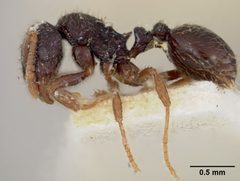
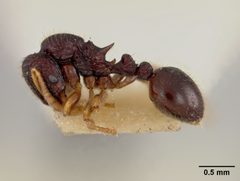
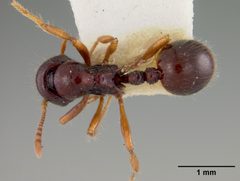
1Rogeria is a of small ants in the Myrmicinae, distributed primarily in the Neotropical region. The genus contains approximately 40 described , most of which inhabit leaf litter and soil in tropical forests. are minute to small in size and often exhibit reduced or eyelessness. The genus is distinguished by specialized mandibular structures and reduced pilosity compared to related myrmicine ants.
Pronunciation
How to pronounce Rogeria: /roʊˈdʒɪəriə/
These audio files are automatically generated. While they are not always 100% accurate, they are a good starting point.
Identification
Rogeria is distinguished from other small myrmicine by the combination of reduced or absent , 12-segmented with a 3-segmented club, and triangular with a dentate masticatory margin. It resembles Solenopsis but differs in having a more compact body, reduced pilosity, and different petiole proportions. It can be separated from closely related genera such as Tetramorium and Triglyphothrix by the reduced eye size and smoother . The genus Stereomyrmex, also eyeless, differs in having elongated mandibles and a distinct body shape. Identification to level requires examination of mandibular tooth count, propodeal spine development, and body patterns.
Images
Habitat
Primarily inhabits tropical and subtropical forest . Most are found in leaf litter, rotting wood, and soil, particularly in moist microhabitats. Some species occupy epiphytic vegetation and arboreal soil accumulations. The shows a preference for humid, shaded environments with stable moisture conditions. Elevation records span from sea level to approximately 1500 meters in montane forests.
Distribution
Neotropical region, with the greatest diversity in Central America and northern South America. Records extend from Mexico through Central America to Brazil, and include Caribbean islands. The is absent from temperate North America and the Old World.
Similar Taxa
- SolenopsisSimilar small size and general myrmicine body plan, but Solenopsis has 10-segmented with 2-segmented club and usually well-developed .
- StereomyrmexAlso exhibits reduced or absent , but has elongated, linear and more elongate body form.
- TetramoriumSimilar compact body and mandibular structure, but has well-developed and different antennal club structure.
More Details
Taxonomic history
The was established by Emery in 1894 with Rogeria belti as the type . It was long considered a specialized offshoot of the Solenopsis genus group, but molecular phylogenetic studies have supported its placement in the tribe Rogeriini.
Collection challenges
Many Rogeria are rarely collected due to their small size, subterranean habits, and preference for humid microhabitats. Specialized collection methods such as Winkler extraction of leaf litter and sampling are most effective.