
Aphaenogaster carolinensis
Wheeler, 1915
Carolina Collared Ant
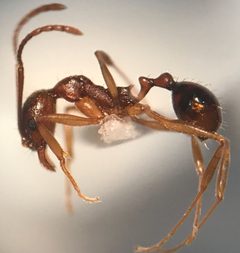
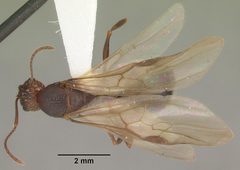
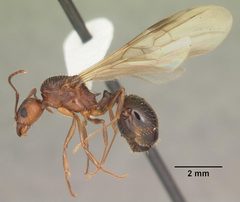
Aphaenogaster carolinensis is a medium-sized in the Formicidae, first described by Wheeler in 1915. The species is notable for its documented substrate vibration generating , in which strike and drag their against surfaces to produce vibrations. This behavior occurs most frequently during confrontations with non-nestmate conspecifics and does not require the presence of food or territory to be initiated.
Pronunciation
How to pronounce Aphaenogaster carolinensis: //ˌæfɪˈnoʊɡæstər ˌkæroʊlɪˈnɛnsɪs//
These audio files are automatically generated. While they are not always 100% accurate, they are a good starting point.
Images
Behavior
generate substrate vibrations by striking a substrate with their and dragging the mandible across the surface. Individual strikes are consistent in pattern and duration, but vibration events vary considerably in overall duration and number of strikes. In laboratory conditions, this is triggered most frequently by confrontation with non-nestmate conspecifics and does not require food resources or colony territory to be initiated.
More Details
Research Context
The substrate vibration of A. carolinensis has been documented in controlled laboratory studies. The full natural history of this , including its preferences, geographic range, and colony structure, remains poorly documented in the available literature.
Sources and further reading
- BugGuide
- GBIF taxonomy match
- iNaturalist taxon
- NCBI Taxonomy
- Catalogue of Life
- Colony of Red Ants Roams the Bohart Museum of Entomology | Bug Squad
- Hiding Above Our Heads: Rare Ant Species Found in NC Treetops
- Bug Eric: Anteater Scarab Beetles
- Bug Eric: Fungus Party-y-y!
- Bug Eric: Wasp Wednesday: Anoplius aethiops
- Curious Wasp Specimen Leads Entomologist to Find a First
- The Substrate Vibration Generating Behavior of Aphaenogaster carolinensis (Hymenoptera: Formicidae)
- The substrate vibration generating behavior of Aphaenogaster carolinensis (Hymenoptera: Formicidae)