
Caenochrysis doriae
(Gribodo, 1874)
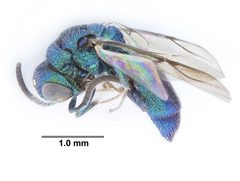
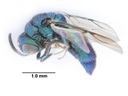
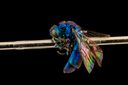
Caenochrysis doriae is a of cuckoo wasp in the Chrysididae, first described by Gribodo in 1874. Members of this are kleptoparasitic, laying in the nests of other and bees. The species has been documented in the southwestern United States, including Arizona and Utah. Specific biological details for C. doriae remain poorly documented in published literature.
Pronunciation
How to pronounce Caenochrysis doriae: //sɛːnoʊˈkrɪsɪs ˈdɔːri.iː//
These audio files are automatically generated. While they are not always 100% accurate, they are a good starting point.
Identification
As a member of Caenochrysis, this likely exhibits the characteristic metallic coloration typical of chrysidid , though the specific color pattern for C. doriae is not well documented. Identification to species level within Caenochrysis typically requires examination of microscopic morphological features including sculpturing of the , punctation patterns, and genitalic structures. The is distinguished from related chrysidid genera by structural features of the and .
Images
Distribution
Documented from the southwestern United States, including localities in northern Arizona (Coconino County) and southern Utah. The appears to occur in montane and transition zone , with records from areas featuring ponderosa pine forest and pinyon-juniper woodland.
Similar Taxa
- Caenochrysis sp.Other within the Caenochrysis are morphologically similar and require detailed examination for reliable separation; the genus contains multiple species with overlapping distributions in western North America.
- Other Chrysididae generaMany chrysidid share metallic coloration and compact body form; Caenochrysis is distinguished by specific thoracic and abdominal structural characters visible under magnification.