
Opheliminae
Genus Guides
1- Ophelimus(Eucalyptus gall wasps)
Opheliminae is a of chalcid wasps within the Eulophidae, comprising two and approximately 56 . Members are gall-forming , with some species such as Ophelimus ramorum acting as pests of Eucalyptus plantations. The subfamily is characterized by its specialized plant- relationships and economic significance in forestry contexts.
Pronunciation
How to pronounce Opheliminae: /oˈfɛlɪmɪniː/
These audio files are automatically generated. While they are not always 100% accurate, they are a good starting point.
Identification
Distinguishing Opheliminae from other Eulophidae requires examination of morphological characters including wing venation, structure, and gall-forming . Specific identification to and level necessitates detailed morphological study and often molecular analysis.
Images
Habitat
Associated with Eucalyptus stands and plantations; specific microhabitat requirements beyond plant presence are not documented.
Distribution
Global distribution encompasses native ranges in Australia and introduced ranges including Portugal and other regions where Eucalyptus is cultivated. Precise native distribution details are limited in available sources.
Host Associations
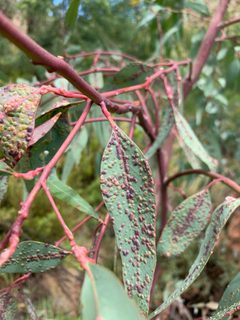
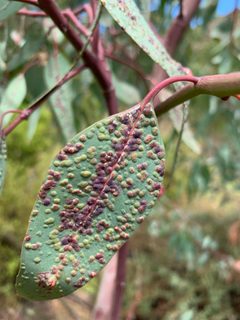
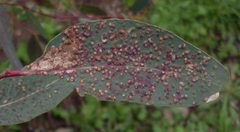
- Eucalyptus globulus - gall inducerPrimary for Ophelimus ramorum in Portugal; galls form on stems, branches, and occasionally leaf petioles and midribs
Life Cycle
Gall-forming induce plant tissue proliferation to create protected chambers for larval development. In Ophelimus ramorum, development occurs entirely within galls on Eucalyptus. No males have been recovered in some , suggesting potential parthenogenetic .
Behavior
Induces gall formation on plants, causing stem deformation, premature leaf , branch dieback, and reduced tree growth. can establish rapidly in suitable host plant environments.
Ecological Role
Acts as a gall inducer and potential pest in Eucalyptus . Serves as for such as Closterocerus chamaeleon, an endoparasitoid reared from Ophelimus galls.
Human Relevance
Economic pest of Eucalyptus globulus plantations in southwestern Europe, threatening productivity of commercial forestry operations. Control strategies under development include testing Eucalyptus and assessing via Closterocerus chamaeleon.
Similar Taxa
- Other Eulophidae subfamiliesOpheliminae is distinguished by gall-forming and association with Eucalyptus; other may be or have different relationships
More Details
Taxonomic composition
Contains two : Ophelimus and Stenomesius, with approximately 56 total
Invasive species documentation
Ophelimus ramorum represents a documented case of human-mediated range expansion, with establishment in Portugal confirmed through integrative morphological, molecular, and biological evidence