
Diparidae
Thomson, 1876
Genus Guides
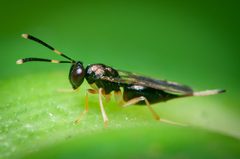
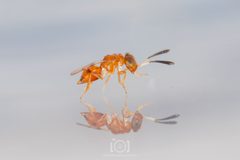
2Diparidae is a of chalcid wasps within the superfamily Chalcidoidea. Formerly classified as a (Diparinae) of Pteromalidae, it is now recognized as a distinct family. The group exhibits pronounced and includes both winged and wingless forms. Most are associated with forest leaf litter .
Pronunciation
How to pronounce Diparidae: //ˌdaɪˈpɛrəˌdiː//
These audio files are automatically generated. While they are not always 100% accurate, they are a good starting point.
Identification
Distinguished from other Chalcidoidea by the combination of 12 flagellomeres with reduced fourth clavomere, hidden subrectangular with marginal setae, and 5-segmented . in wing condition and antennal form is pronounced and aids recognition. Formerly included in Pteromalidae as Diparinae; now separated based on these morphological characters.
Images
Appearance
Small chalcid wasps with marked . Males are typically (fully winged) with and show relatively uniform across . Females display greater variation: may be macropterous, brachypterous (reduced wings), or (wingless), and often possess antennae. Diagnostic features include: antenna with 12 flagellomeres including a small fourth clavomere; flexible, subrectangular hidden behind with marginal row of setae; with three or four teeth; all legs with five tarsomeres.
Habitat
Primarily collected from leaf litter in forest environments. Associated with ground-layer and decomposing organic matter .
Distribution
Almost worldwide distribution with apparent Gondwanan origins. Highest generic diversity in South Africa and Australia. Eastern North American include Dipara trilineata, widespread across the region with in the southern Appalachians.
Host Associations
Life Cycle
development; specific details of , larval, and pupal stages not documented in available sources. emerge from remains including weevils, , and fly pupae.
Behavior
Females of some are flightless (), suggesting limited capability, though phylogeographic studies of Dipara trilineata show limited structure despite this constraint. Males are winged and likely responsible for dispersal.
Ecological Role
of insects in forest leaf litter . Contribute to of weevil and other arthropods. Role in decomposition through association with leaf litter .
Human Relevance
No documented direct economic or agricultural significance. potential exists given relationships with weevils, but not developed.
Similar Taxa
- PteromalidaeDiparidae was formerly classified as Diparinae within Pteromalidae; separated based on antennal structure, , and tarsal segmentation
More Details
Taxonomic history
Elevated from rank (Diparinae) to status; previously included in Pteromalidae
Sexual dimorphism
One of the most sexually dimorphic in Chalcidoidea, with females showing extensive morphological variation in wing development and antennal form
Flightlessness
Multiple independent origins of female flightlessness (aptery and brachyptery) documented across the
Sources and further reading
- BugGuide
- Wikipedia
- GBIF taxonomy match
- iNaturalist taxon
- NCBI Taxonomy
- Catalogue of Life
- A systematic review of the Families Chrysolampidae, Cleonymidae, Diparidae, Cerocephalidae, Chalcedectidae, Ceidae and Herbertiidae
- Limited phylogeographic structure in a flightless, Appalachian chalcidoid wasp, Dipara trilineata (Yoshimoto) (Hymenoptera, Diparidae), with reassessment of the male of the species