
Neoptilia
Ashmead, 1898
hollyhock sawflies, purple sawfly
Species Guides
2- Neoptilia malvacearum
- Neoptilia tora(Mallow Sawfly)
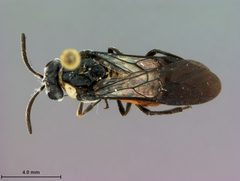
Neoptilia is a of in the Argidae, first described by Ashmead in 1898. The genus contains at least two recognized : N. malvacearum (hollyhock sawfly) and N. tora (purple sawfly). These are herbivorous insects with larvae that feed on plants. As argid sawflies, they lack the narrow waist characteristic of many other hymenopterans and possess a broad connection between and .

Pronunciation
How to pronounce Neoptilia: //ˌniːɒpˈtɪliə//
These audio files are automatically generated. While they are not always 100% accurate, they are a good starting point.
Identification
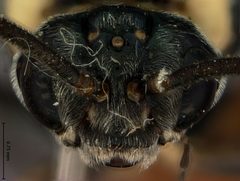
Neoptilia can be distinguished from other argid sawflies by specific morphological characters, though detailed diagnostic features for the are not well documented in general sources. The two described species differ in plant associations: N. malvacearum is associated with mallows (Malvaceae), while N. tora has been recorded on related hosts. are small to medium-sized with the typical broad-bodied, -waistless form of Argidae. Larvae are caterpillar-like with on most abdominal segments, unlike lepidopteran larvae which have prolegs only on segments 3-6 and 10.
Images
Habitat
in this are found in supporting their plants. Neoptilia malvacearum occurs where mallows (including hollyhock, Alcea rosea) grow, typically in gardens, disturbed areas, and riparian zones. Neoptilia tora has been associated with leguminous host plants in similar open or semi-open habitats.
Distribution
The is known from North America. Neoptilia malvacearum has been recorded across much of the United States and southern Canada. Neoptilia tora is known from the western United States. Specific range boundaries for the genus as a whole are incompletely documented.
Diet
Larvae of N. malvacearum feed on mallows (Malvaceae), particularly hollyhock (Alcea rosea). Larvae of N. tora feed on leguminous plants. feeding habits are not well documented but argid sawflies generally consume pollen and nectar.
Host Associations
- Alcea rosea - larval food planthollyhock; primary of N. malvacearum
- Malvaceae - larval food plant mallow ; for N. malvacearum
- Fabaceae - larval food plant legume ; for N. tora
Life Cycle
in Argidae typically have complete with , larval, pupal, and stages. Larvae are external feeders on plant foliage. occurs in soil or protected locations. Specific details for Neoptilia are not well documented, though N. malvacearum likely has multiple per year in warmer climates.
Ecological Role
As herbivores, larvae function as primary consumers in , converting plant to animal tissue available to and . Their feeding damage on leaves may influence plant growth and , though they are not considered major economic pests.
Human Relevance
Neoptilia malvacearum is occasionally noted as a garden pest on hollyhocks, where larval feeding can defoliate plants. Control is rarely necessary; hand-picking larvae or tolerating minor damage is usually sufficient. The has minimal other economic or medical significance.
Similar Taxa
- Other Argidae generaNeoptilia shares the broad waist and general body plan with all Argidae, but differs in specific associations and presumably in detailed of , wing venation, and genitalia
- TenthredinidaeAnother ; members can be distinguished by antennal structure (Argidae have simple or slightly clubbed , while Tenthredinidae often have more complex forms) and details of wing venation
- Lepidoptera larvae larvae resemble caterpillars but have on all abdominal segments (7-8 pairs) rather than 5 or fewer pairs; sawfly larvae also lack the (hooked spines) found on lepidopteran prolegs
More Details
Taxonomic status
GBIF lists the status as 'DOUBTFUL' with a 'HIGHERRANK' match type, suggesting potential taxonomic uncertainty or incomplete data in that database. The genus is accepted in other sources including ITIS and iNaturalist.
Species diversity
Only two are formally described, but the may contain additional undescribed species. The specific epithet 'malvacearum' refers to the mallow , while 'tora' refers to the host plant Cassia tora.