
Ceratina strenua
Smith, 1879
nimble ceratina, nimble small carpenter bee
Ceratina strenua, commonly known as the nimble ceratina, is a of small carpenter bee in the Apidae. It is native to North America, with confirmed records from Vermont and other regions. As a member of the Ceratina, it belongs to a group of small, solitary bees that nest in hollow plant stems or other pre-existing cavities. The species has been documented as a of multiple flowering plants, including Penstemon digitalis, Monarda fistulosa, and Eryngium yuccifolium, and exhibits flexible foraging preferences that vary depending on flower identity and competitive context.
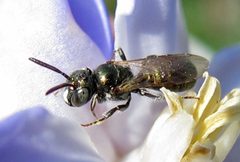
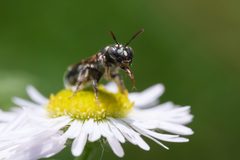
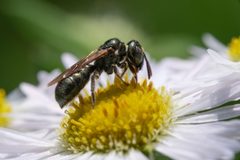
Pronunciation
How to pronounce Ceratina strenua: //ˌsɛrəˈtaɪnə ˈstrɛnjuə//
These audio files are automatically generated. While they are not always 100% accurate, they are a good starting point.
Images
Distribution
North America; confirmed present in Vermont, United States. The is part of the broader Nearctic fauna of small carpenter bees.
Behavior
Observed foraging on flowers of Penstemon digitalis, Monarda fistulosa, and Eryngium yuccifolium. Patch-size preference varies by flower : when visiting Penstemon digitalis or Monarda fistulosa, tends to visit isolated flowers more often or shows no preference in patch ; when visiting Eryngium yuccifolium, shows preference for denser flower patches. This flexible foraging strategy may facilitate coexistence with larger, more social bees such as Bombus species.
Ecological Role
Contributes to pollination of flowering plants in prairie and meadow . The ' ability to utilize isolated flowers may reduce competitive overlap with bumble bees, potentially supporting coexistence.
Human Relevance
Similar Taxa
- Ceratina calcarataOverlaps in eastern North American range; both are small carpenter bees with similar nesting in hollow stems.
- Ceratina duplaShares preferences and geographic range; identification requires examination of subtle morphological characters.
More Details
Foraging ecology research
A 2016 study by Barley et al. in Environmental Entomology found that Ceratina was the only group to be a significant visitor for all three focal flower (Penstemon digitalis, Monarda fistulosa, Eryngium yuccifolium) in an Ohio prairie restoration, yet showed contrasting patch- preferences depending on flower identity. This suggests that flower identity and influence foraging decisions in this .