
Nomada gracilis
Cresson, 1863
Gracile Nomad
Nomada gracilis is a cleptoparasitic in the Apidae, first described by Cresson in 1863. Like other members of the Nomada, it does not construct nests or collect pollen, instead laying in the nests of bee species. The larvae consume the host's provisions and often kill the host larva. This species is recorded from North America, with specific observations documented from Vermont, United States.
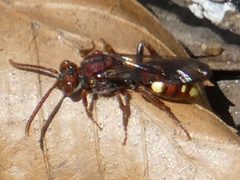
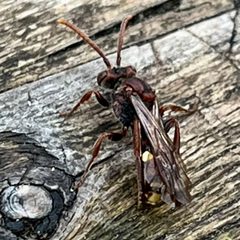
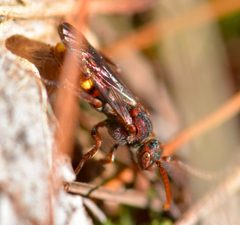
Pronunciation
How to pronounce Nomada gracilis: /nɔˈmaːda ɡraˈkiːlis/
These audio files are automatically generated. While they are not always 100% accurate, they are a good starting point.
Images
Distribution
North America; specifically recorded from Vermont, United States. Distribution records are sparse.
Ecological Role
As a (cuckoo bee), N. gracilis functions as a nest of other , potentially regulating . Its parasitic lifestyle reduces its own energetic investment in offspring provisioning while exploiting the foraging efforts of host bees.
Sources and further reading
- BugGuide
- GBIF taxonomy match
- iNaturalist taxon
- NCBI Taxonomy
- Catalogue of Life
- entomology | Blog - Part 10
- Northern Ireland, invertebrate finds in review 2023 - Buglife Blog - Buglife
- Bichos Argentinos #2 – Pseudomyrmex sp. | Beetles In The Bush
- Traffic Jam Treehoppers | Beetles In The Bush
- Not-so Solitary Bees - Buglife Blog - Buglife
- Bare ground experiments to help save rare bees and wasps - Buglife Blog - Buglife