
Nomada erigeronis
Robertson, 1897
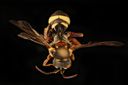
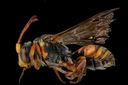
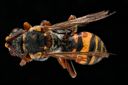
Nomada erigeronis is a of nomad bee (cuckoo bee) in the Apidae, first described by Robertson in 1897. Like other members of the Nomada, it is a kleptoparasite that lays its in the nests of other species, particularly mining bees in the genus Andrena. The species is found in North America and is one of many Nomada species that exploit the nesting efforts of bees rather than constructing their own nests or collecting pollen.
Pronunciation
How to pronounce Nomada erigeronis: //nəʊˈmɑːdə ˌɛrɪdʒəˈroʊnɪs//
These audio files are automatically generated. While they are not always 100% accurate, they are a good starting point.
Images
Distribution
North America
Host Associations
- Andrena - kleptoparasiteNomada are known to parasitize nests of Andrena mining bees; specific associations for N. erigeronis are not documented in available sources
Ecological Role
Kleptoparasite of ground-nesting bees. As a cuckoo bee, N. erigeronis does not collect pollen or construct nests, instead relying on bees to provision its offspring. This parasitic lifestyle reduces the reproductive success of host .
Similar Taxa
- Other Nomada speciesMany Nomada are visually similar, with yellow and black or red and black coloration; precise identification often requires examination of morphological details such as facial markings, structure, and genitalia
- Andrena host speciesFemale Nomada may be confused with their Andrena when entering nests; however, Nomada lack the scopal hairs for pollen collection present in female Andrena
More Details
Taxonomic status
The was described by Charles Robertson in 1897. GBIF records indicate 739 iNaturalist observations, suggesting it is not exceptionally rare, though detailed biological studies are lacking.
Sources and further reading
- BugGuide
- Wikipedia
- GBIF taxonomy match
- iNaturalist taxon
- NCBI Taxonomy
- Catalogue of Life
- Image by UC Davis Alumnus Ian Wright Appears in ESA World Calendar | Bug Squad
- entomology | Blog - Part 10
- Northern Ireland, invertebrate finds in review 2023 - Buglife Blog - Buglife
- Not-so Solitary Bees - Buglife Blog - Buglife
- Bare ground experiments to help save rare bees and wasps - Buglife Blog - Buglife
- behaviour | Blog