
Nomada bethunei
Cockerell, 1903
Bethune's Cuckoo Nomad Bee
Nomada bethunei is a of kleptoparasitic cuckoo bee in the Apidae, first described by Cockerell in 1903. As a member of the Nomada, it is an obligate nest that lays in the nests of species, primarily Andrena mining bees. The species is found in North America, with records from Vermont and other regions. Like other Nomada species, it lacks the branched body hairs typical of pollen-collecting bees and instead relies on host bees to provision its offspring.
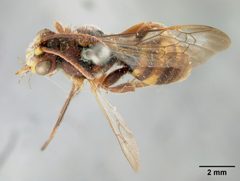
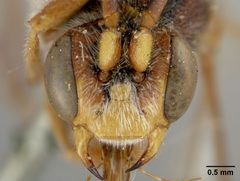
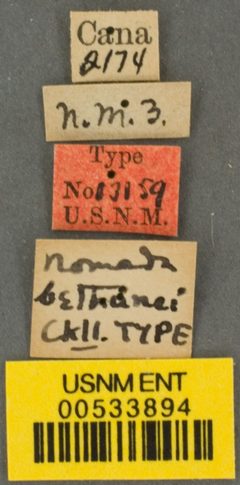
Pronunciation
How to pronounce Nomada bethunei: /nəʊˈmɑːdə bɛˈθjuːnaɪ/
These audio files are automatically generated. While they are not always 100% accurate, they are a good starting point.
Images
Distribution
North America; specifically recorded from Vermont, United States. The ' broader range within North America remains poorly documented.
Host Associations
Ecological Role
Kleptoparasite of ground-nesting bees. As a cuckoo bee, it contributes to of its and may influence nest site dynamics in .
Similar Taxa
- Other Nomada speciesMembers of the Nomada share kleptoparasitic lifestyle, -like appearance due to reduced body hair, and similar size range (typically 5–15 mm). Identification to level requires examination of subtle morphological characters including color pattern, antennal structure, and male genitalia.
- Andrena host speciesFemale Nomada may be confused with their Andrena due to chemical mimicry; males produce mandibular gland compounds identical to host odors, and females may enter host nests undetected.
More Details
Taxonomic history
Described by Theodore Dru Alison Cockerell in 1903. The epithet 'bethunei' likely honors a person, though the specific honoree is not documented in available sources.
Data deficiency
Despite being described over a century ago, N. bethunei remains poorly known with minimal published biological information beyond original description and basic distribution records. This reflects a broader pattern of underdocumentation for many North American Nomada .
Sources and further reading
- BugGuide
- Wikipedia
- GBIF taxonomy match
- iNaturalist taxon
- NCBI Taxonomy
- Catalogue of Life
- Image by UC Davis Alumnus Ian Wright Appears in ESA World Calendar | Bug Squad
- entomology | Blog - Part 10
- Northern Ireland, invertebrate finds in review 2023 - Buglife Blog - Buglife
- Not-so Solitary Bees - Buglife Blog - Buglife
- Bare ground experiments to help save rare bees and wasps - Buglife Blog - Buglife
- behaviour | Blog