
Nomada bella
Cresson, 1863
Belle Nomad Bee
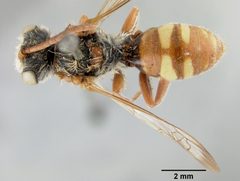
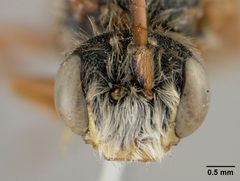
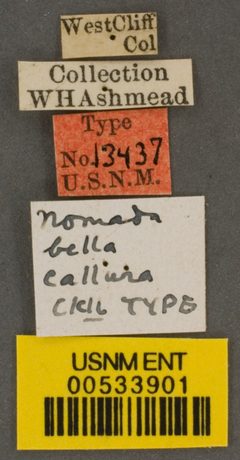
Nomada bella is a cuckoo bee in the Apidae, first described by Cresson in 1863. As a kleptoparasite, females lay in the nests of species rather than constructing their own nests or collecting pollen. The species occurs in North America, with documented records from Vermont and other regions. Like other members of the Nomada, it exhibits the characteristic -like appearance of cuckoo bees, lacking the dense branched hairs used for pollen collection that are typical of non-parasitic bees.
Pronunciation
How to pronounce Nomada bella: //nɔˈma.da ˈbɛl.la//
These audio files are automatically generated. While they are not always 100% accurate, they are a good starting point.
Images
Distribution
North America; specifically recorded from Vermont, United States. GBIF distribution records indicate presence in North America broadly.
Ecological Role
Kleptoparasite of other . As a cuckoo bee, it contributes to of bee species and may influence nest site availability in bee .
Sources and further reading
- BugGuide
- GBIF taxonomy match
- iNaturalist taxon
- NCBI Taxonomy
- Catalogue of Life
- Image by UC Davis Alumnus Ian Wright Appears in ESA World Calendar | Bug Squad
- entomology | Blog - Part 10
- biodiversity | Blog - Part 35
- Northern Ireland, invertebrate finds in review 2023 - Buglife Blog - Buglife
- Not-so Solitary Bees - Buglife Blog - Buglife
- Bare ground experiments to help save rare bees and wasps - Buglife Blog - Buglife