
Eucera rosae
(Robertson, 1900)
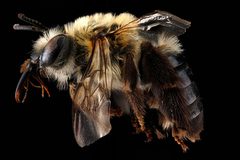
Eucera rosae is a of long-horned bee in the Apidae, described by Robertson in 1900. It is found in North America. Like other members of the Eucera, it is a solitary ground-nesting . The specific epithet 'rosae' suggests an association with roses, though this relationship requires confirmation from primary sources.


Pronunciation
How to pronounce Eucera rosae: /juːˈsɛrə ˈroʊziː/
These audio files are automatically generated. While they are not always 100% accurate, they are a good starting point.
Images
Distribution
North America. Specific locality details beyond continental distribution are not documented in available sources.
More Details
Taxonomic history
Originally described as Synhalonia rosae by Robertson in 1900, later transferred to Eucera. The basionym Synhalonia rosae is recorded in NCBI .
Data availability
This has limited published information. iNaturalist records 15 observations. No detailed ecological or behavioral studies were found in the provided sources.
Sources and further reading
- BugGuide
- Wikipedia
- GBIF taxonomy match
- iNaturalist taxon
- NCBI Taxonomy
- Catalogue of Life
- ESA Entomology Games Are Both Educational and Entertaining | Bug Squad
- Primary Type List | Entomology Research Museum
- Wild Pollinators Get the Job Done
- Conservation Volunteering at Prawle Point with Buglife - Buglife Blog - Buglife
- The Long-horned Bee, a Victim of Changing Times - Buglife Blog - Buglife
- Cattle Grazing Helps Pollinators in Sagebrush Rangelands