
Bombus mckayi
Ashmead, 1902
McKay's Western Bumble Bee
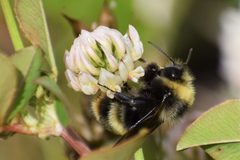
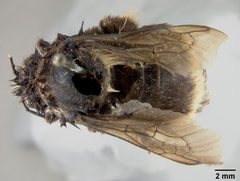
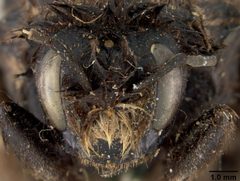
Bombus mckayi is a North American originally described as a of Bombus occidentalis. It is now recognized as a distinct species within the subgenus Bombus sensu stricto. The species occurs in western North America, though detailed ecological information remains limited compared to better-studied .
Pronunciation
How to pronounce Bombus mckayi: //ˈbɒmbəs məkˈkeɪ.i//
These audio files are automatically generated. While they are not always 100% accurate, they are a good starting point.
Identification
Historically treated as a of Bombus occidentalis; separation based on morphological and genetic differences. Diagnostic features distinguishing it from B. occidentalis sensu stricto include subtle color pattern and morphological variations, though field identification requires expert examination. , queens, and males show the typical robust, densely hairy body form characteristic of the .
Images
Distribution
Western North America. Records indicate presence across parts of the western United States and adjacent Canada, though precise range boundaries remain incompletely documented. GBIF records confirm North American distribution.
Ecological Role
As a , expected to function as a of flowering plants, including wildflowers and potentially agricultural crops. Like other Bombus species, capable of buzz pollination (sonication) to extract pollen from poricidal anthers. Specific plant associations have not been systematically documented.
Similar Taxa
- Bombus occidentalisFormerly treated as ; B. mckayi was described as B. occidentalis mckayi before elevation to status. Both share western North American distribution and similar general .
More Details
Taxonomic History
Originally described by Ashmead in 1902 as Bombus occidentalis mckayi, later elevated to full status. The taxonomic revision reflects accumulating evidence of distinct evolutionary lineages within the historically broad concept of B. occidentalis.
Conservation Status
Conservation status has not been independently assessed; historical confusion with B. occidentalis complicates trend analysis. The broader B. occidentalis has experienced documented declines in parts of its range.
Sources and further reading
- BugGuide
- GBIF taxonomy match
- iNaturalist taxon
- NCBI Taxonomy
- Catalogue of Life
- Celebrating Bumble Bees on World Bee Day | Bug Squad
- Bumble Bee Mellowing Out on the Mallow | Bug Squad
- The Buzz: Protecting Our Bumble Bees | Bug Squad
- California Has No State Bee--Yet! | Bug Squad
- Saving California's Bumble Bees: Become a Citizen Scientist | Bug Squad
- Bumble Bees: Feeling Impact of Climate Change | Bug Squad