
Andrena brevipalpis
Cockerell, 1930
Short-palped Miner, short-tongued miner bee
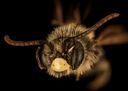
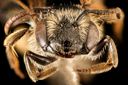
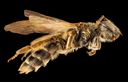
Andrena brevipalpis is a solitary mining bee in the Andrenidae, described by Cockerell in 1930. It is native to North America, with confirmed records from Vermont and broader North American distribution. The species is an oligolectic , collecting pollen exclusively from Rhus (sumac) flowers. Like other Andrena species, it nests in the ground and is active during spring.
Pronunciation
How to pronounce Andrena brevipalpis: /ænˈdriːnə ˌbrɛvɪˈpælpɪs/
These audio files are automatically generated. While they are not always 100% accurate, they are a good starting point.
Images
Habitat
Ground-nesting requiring bare or sparsely vegetated soil for nest excavation. Associated with supporting its plant Rhus (sumac).
Distribution
North America; confirmed present in Vermont, United States. Broader range across North America based on distribution records.
Seasonality
Spring-active, consistent with other Andrena and its association with spring-blooming Rhus flowers.
Diet
Oligolectic pollen on Rhus (sumac) flowers. likely consume nectar from these and potentially other flowers.
Host Associations
- Rhus - pollen sourceoligolectic pollen
Life Cycle
Solitary with ground-nesting : females excavate tunnels, provision with pollen and nectar, lay , and larvae develop underground. Males typically emerge before females.
Behavior
Females dig individual nest burrows in soil. Males patrol nesting areas seeking mates. As an oligolectic , females exhibit flower constancy to Rhus during pollen collection.
Ecological Role
of Rhus (sumac) flowers. Contributes to spring pollination services in forest and woodland edge where sumac occurs.
More Details
Taxonomic note
The specific epithet brevipalpis translates to 'short-palped', referring to reduced mouthpart palps. The alternative 'short-tongued miner ' appears in some sources but 'Short-palped Miner' is the preferred common name.
Conservation data
Only 22 observations recorded in iNaturalist as of source date, suggesting it may be infrequently encountered or under-recorded, possibly due to its specialized plant association and spring .
Sources and further reading
- BugGuide
- GBIF taxonomy match
- iNaturalist taxon
- NCBI Taxonomy
- Catalogue of Life
- Geoffrey Attardo's Landmark Research on Genomics of Tsetse Flies | Bug Squad
- Not-so Solitary Bees - Buglife Blog - Buglife
- Northern Ireland, invertebrate finds in review 2023 - Buglife Blog - Buglife
- In a New Study, Spring Forest Bees Get Their Due
- Bare ground experiments to help save rare bees and wasps - Buglife Blog - Buglife
- What’s in a name….? - Buglife Blog - Buglife