
Andrena asteris
Robertson, 1891
Aster Mining Bee, aster miner bee
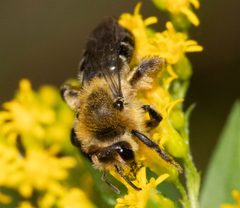
Andrena asteris is a solitary mining bee in the Andrenidae, native to North America. The is named for its documented association with Aster flowers, though specific ecological details remain limited. Like other Andrena species, it nests in soil and is active during spring and summer. The species has been recorded from Vermont and other parts of North America, with 793 observations documented on iNaturalist.
Pronunciation
How to pronounce Andrena asteris: /ænˈdriːnə ˈæstərɪs/
These audio files are automatically generated. While they are not always 100% accurate, they are a good starting point.
Identification
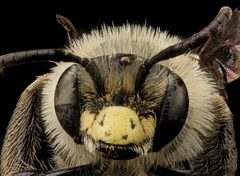
Distinguished from similar Andrena by its specific floral association with Aster and morphological characters typical of the . Detailed diagnostic features require examination.
Images
Habitat
Open areas with Aster flowers; nests in bare or sparsely vegetated soil typical of mining bee .
Distribution
North America; specifically recorded from Vermont, United States.
Seasonality
Spring to summer activity period, coinciding with Aster bloom.
Diet
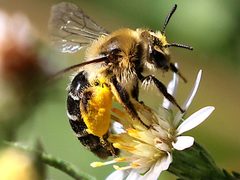
Pollen and nectar; specifically associated with Aster flowers.
Host Associations
- Aster - forage plant name reflects documented floral association.
Life Cycle
Solitary with typical mining bee : females excavate underground nests, provision with pollen and nectar, lay , and larvae develop independently. Males typically emerge before females.
Ecological Role
of Aster flowers; contributes to spring and summer pollination services in open .
Similar Taxa
- AndrenaLarge with many morphologically similar ; requires identification to distinguish A. asteris from .
Sources and further reading
- BugGuide
- Wikipedia
- GBIF taxonomy match
- iNaturalist taxon
- NCBI Taxonomy
- Catalogue of Life
- Not-so Solitary Bees - Buglife Blog - Buglife
- Northern Ireland, invertebrate finds in review 2023 - Buglife Blog - Buglife
- In a New Study, Spring Forest Bees Get Their Due
- Bare ground experiments to help save rare bees and wasps - Buglife Blog - Buglife
- A Cockroach and a Cacophonous Case of Careless Characters
- What’s in a name….? - Buglife Blog - Buglife