
Crisicoccus
Ferris, 1950
Species Guides
1- Crisicoccus taxodii(Bald Cypress Mealybug)
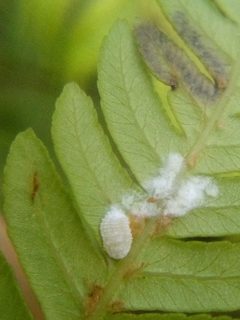
Crisicoccus is a of mealybugs in the Pseudococcidae, established by Ferris in 1950. in this genus are phloem-feeding pests of woody plants, with documented including figs, grapes, pears, persimmons, walnuts, and pines. Some species are multivoltine with three per year and overwinter as nymphs in roots or under bark. Several species have been introduced outside their native ranges and are considered significant agricultural and forestry pests.
Pronunciation
How to pronounce Crisicoccus: //ˌkraɪsɪˈkɒkəs//
These audio files are automatically generated. While they are not always 100% accurate, they are a good starting point.
Identification
Distinguishable from other mealybug by morphological features of the female, including details of cerarii, setae, and trilocular pores; precise identification requires slide-mounted specimens and examination of taxonomic keys. -level identification within Crisicoccus requires specialized taxonomic expertise due to morphological similarity among .
Images
Habitat
Associated with woody plants including fruit orchards and pine forests; some overwinter as nymphs in roots and under rough bark, with year-round persistence possible in root zones.
Distribution
Native range includes Asia (Japan, Korea, China with uncertainty); at least two have been introduced to Europe (Italy, France).
Seasonality
Multivoltine show three per year in temperate regions; occurs as second- or third-instar nymphs; first-instar nymphs () are active dispersers.
Diet
Phloem-feeding on leaves and fruits of plants.
Host Associations
- Ficus carica - Documented for C. seruratus
- Vitis spp. - Documented for C. seruratus
- Pyrus pyrifolia var. culta - Documented for C. seruratus
- Diospyros kaki - Documented for C. seruratus
- Juglans regia - Documented for C. seruratus
- Acer palmatum - Documented for C. seruratus
- Acer davidii - Documented for C. seruratus
- Obelicea serurata - Documented for C. seruratus
- Aster indicus - Documented for C. seruratus
- Pinus pinaster - Documented for C. pini; first Italian record
- Pinus pinea - Documented for C. pini; new record
- Pyrus - Documented for C. matsumotoi in Korean orchards
Life Cycle
Multivoltine with three per year reported for C. seruratus in Japan; stage 8-11 days; nymphal stages 34-38 days; females live 12-15 days; males are winged, short-lived, and non-feeding; overwinters as second- or third-instar nymph.
Behavior
First-instar nymphs () are highly active and search for feeding sites; male second-instar nymphs are gregarious and secrete a cover enclosing subsequent instars; nymphs migrate from leaves to roots after autumn harvest to overwinter.
Ecological Role
Agricultural and forestry pest causing economic damage through yield reduction, fruit downgrading, and tree decline; honeydew deposition promotes growth.
Human Relevance
Significant pest of fruit crops and pine forests; C. seruratus identified as potential Union pest for the EU; susceptibility documented for some .
Similar Taxa
- PseudococcusSimilar general mealybug ; distinguished by detailed morphological features of cerarii and pore structures requiring microscopic examination
- PlanococcusSimilar general mealybug ; distinguished by arrangement of cerarii and other cuticular structures
Misconceptions
Crisicoccus seruratus was formerly misidentified as C. matsumotoi, leading to confusion in historical literature and commodity risk assessments; records of Crisicoccus in China and Korea carry high uncertainty due to historical misidentifications.
More Details
Taxonomic History
Crisicoccus seruratus was previously known as C. matsumotoi; the was reclassified, though older literature and risk assessments may use the obsolete name.
Quarantine Significance
C. seruratus satisfies criteria to be considered a potential Union pest for the European Union due to its range, potential for establishment, and economic impact.
Sources and further reading
- BugGuide
- GBIF taxonomy match
- iNaturalist taxon
- NCBI Taxonomy
- Catalogue of Life
- Distribution of Matsumoto Mealybug, Crisicoccus matsumotoi (Hemiptera: Pseudococcidae) in Pear Orchards and Susceptibility to Insecticides
- First record of the Kuwana pine mealybug Crisicoccus pini (Kuwana) in Italy: a new threat to Italian pine forests?
- Pest categorisation of Crisicoccus seruratus.