
Cerococcidae
ornate pit scales, cerococcids, false pit scales
Genus Guides
1- Cerococcus(ornate pit scales)
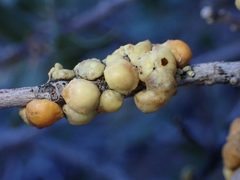
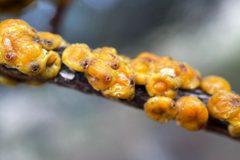
is a of scale insects (Hemiptera: Sternorrhyncha) commonly known as ornate pit scales or false pit . The family comprises approximately 80 in five : Antecerococcus, Asterococcus, Cerochiton, Cerococcus, and Solenophora. females produce distinctive protective waxy tests that vary in color from creamy or brown to orange, yellow, red, pink, or white. The family exhibits in test and instar development, with males possessing smaller, narrower tests than females.
Pronunciation
How to pronounce Cerococcidae: /sɛɹoʊˈkɒksɪdiː/
These audio files are automatically generated. While they are not always 100% accurate, they are a good starting point.
Identification
can be distinguished from other insect by the presence of a protective waxy test with distinctive coloration and structural features. The family is divided into two morphological groups based on the presence or absence of anteroventral on the venter of the anal lobes: Antecerococcus and Solenophora possess this sclerotization, while Asterococcus and Cerococcus lack it. Additional diagnostic characters include the absence of setae along the inner margin of each anal lobe and presence of a seta posteriorly on each lobe in the Antecerococcus group. Generic identification requires examination of female , particularly test structure and anal lobe characters.
Images
Appearance
females produce a protective waxy test that shields the body. Tests are mostly creamy or varying shades of brown; some display orange, yellow, red, pink, or white coloration. Male tests are smaller and narrower than female tests and develop during the second instar. In the Asterococcus and Solenophora, the shed skin of the first instar is incorporated into the test structure. Second instar females develop tests in Asterococcus and Solenophora, whereas in Cerococcus, test development occurs in the third instar.
Distribution
The has a worldwide distribution, though individual exhibit distinct geographic patterns. Antecerococcus is distributed globally but is most abundant in the western Palaearctic, western Oriental, and Afrotropical Regions. Asterococcus is restricted to the Oriental Region. Cerochiton is restricted to the southern Oriental Region. Cerococcus is restricted to Central and North America. Solenophora is known only from New Zealand.
Seasonality
In the United States, where several Cerococcus have been studied, there is a single per year. overwinter inside the female test and hatch in spring. First instars emerge through a small hole at the back of the test. Second instars appear early in summer, with developing towards the end of summer. Egg-laying occurs in autumn.
Host Associations
- Boehmeria nivea - plantAntecerococcus roseus has been observed on ramie (Urticaceae) in China
Life Cycle
Females have three instar stages; males have five instar stages. are retained inside the female test and overwinter. First instars are ambulatory and disperse around the plant. in test development timing: males develop tests in the second instar; females develop tests in the second instar (Asterococcus, Solenophora) or third instar (Cerococcus). Males occur in most .
Behavior
First instar nymphs are ambulatory and actively disperse around the plant after hatching from the female test. hatch within the protective maternal test and emerge through a small hole at the back.
Ecological Role
serve as for in the Encyrtidae (Hymenoptera: Chalcidoidea). Antecerococcus roseus has been documented as a host for Microterys perlucidus and Metaphycus roseus in China.
Human Relevance
Antecerococcus roseus has been recorded as a pest of cultivated ramie (Boehmeria nivea), a fiber crop, in China.
Similar Taxa
- other scale insect families (Coccoidea) is distinguished by the combination of waxy test structure, anal lobe (particularly anteroventral ), and specific instar development patterns. The was historically confused with other pit groups but is now recognized as distinct based on female morphological characters.
More Details
Taxonomic History
The was last revised in the 1970s–1980s with three and 69 . A 2016 revision expanded this to five genera and 80 species, reviving Antecerococcus and establishing the new genus Cerochiton. The type species of Cerococcus, C. quercus Comstock, is from the Nearctic and lacks anteroventral .
Morphological Groups
The divides into two groups: (1) Antecerococcus and Solenophora, with anteroventral , no setae along inner margin of anal lobes, and seta posteriorly on each lobe; and (2) Asterococcus and Cerococcus, lacking anteroventral sclerotization. Cerochiton falls within the Cerococcus group.
Sources and further reading
- BugGuide
- Wikipedia
- GBIF taxonomy match
- iNaturalist taxon
- NCBI Taxonomy
- Catalogue of Life
- Two new species of Encyrtidae (Hymenoptera: Chalcidoidea) from China, parasitoid of Antecerococcus roseus (Green) (Hemiptera: Cerococcidae) on Boehmeria nivea (L.) Gaud
- A revision of the family Cerococcidae Balachowsky (Hemiptera: Sternorrhyncha, Coccomorpha) with particular reference to species from the Afrotropical, western Palaearctic and western Oriental Regions, with the revival of Antecerococcus Green and description of a new genus and fifteen new species, and with ten new synonomies